

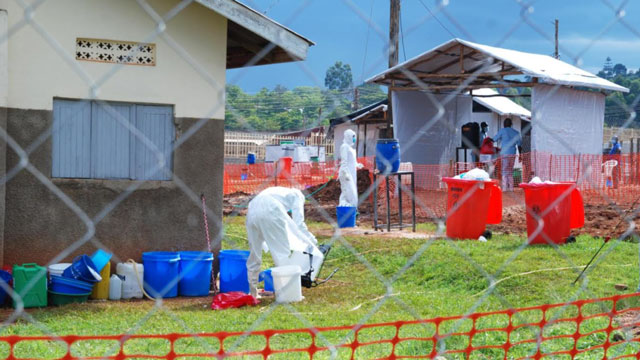
The Ministry of Health has confirmed two additional cases of Ebola Virus Disease (EVD) in Uganda, bringing the cumulative number of confirmed infections in the country to nine, including one death.
In an official statement released on Friday, May 29, 2026, the Director General of Health Services, Dr. Charles Olaro, revealed that the latest cases involve Congolese nationals closely linked to existing transmission chains.
Quick Isolation of New Transmission Chains
Rapid response teams have aggressively moved to ring-fence the new infections to prevent wider community transmission within urban centers.
-
Case 8: A Congolese national who spontaneously developed classic viral symptoms and was immediately intercepted and placed into an isolation ward.

-
Case 9: An individual who was already flagged on the Ministry’s high-risk contact database. This patient was systematically tracked down and moved directly under strict medical observation.
According to Dr. Olaro, all secondary contacts linked to these two new patients have already been mapped out for the mandatory 21-day health surveillance window.
Timeline of the 2026 Kampala Ebola Outbreak
The outbreak primarily stems from cross-border movements out of the eastern Democratic Republic of Congo (DRC), eventually filtering into Uganda’s private medical network.

Ebola Infection Timeline (May 2026):
├── May 23: 3 cases confirmed (Included a symptomatic Congolese national who traveled via Arua and Entebbe)
├── May 25: 2 cases confirmed (Ugandan frontline health workers at a Kampala private facility)
└── May 29: 2 cases confirmed (Latest Congolese contacts placed under strict isolation)
The initial index chain involved a symptomatic patient who traveled heavily across the country—moving through Arua and Entebbe—before finally seeking specialized care at a private hospital facility in Kampala, creating a complex web for contact tracers.
Know the Symptoms: Early Detection Saves Lives
Health officials are imploring the public to bypass self-medication and immediately flag physical anomalies. When viral hemorrhagic fevers are treated in their early stages, survival rates increase dramatically.
Critical EVD Symptoms to Monitor:
-
Sudden, high-grade fever and extreme fatigue
-
Severe muscle pain and persistent headaches
-
Uncontrolled vomiting and diarrhea
-
Unexplained bruising or bleeding from bodily openings
Emergency Notice: If you or an associate exhibit these symptoms, do not use public transport. Contact the Ministry of Health immediately via their official toll-free emergency numbers for an evacuation team.
Aggressive Lockdown and Travel Halts Imposed
To blunt the geographic expansion of the virus, the government has instituted strict local containment protocols:
-
Gathering Bans: Public assemblies, political rallies, and cultural gatherings have been suspended in heavily affected zones.
-
Transit Restrictions: Local transport activities have been selectively frozen in high-risk border entry corridors.
-
Airlines Suspend Routes: In a proactive safety measure, Uganda Airlines has officially suspended all flight operations on its Entebbe–Kinshasa route to minimize international cross-border seeding.
International health agencies and global partners have embedded response teams within the Ministry of Health to bolster logistics, supply therapeutics, and expand ring-vaccination protocols in high-exposure sectors.