

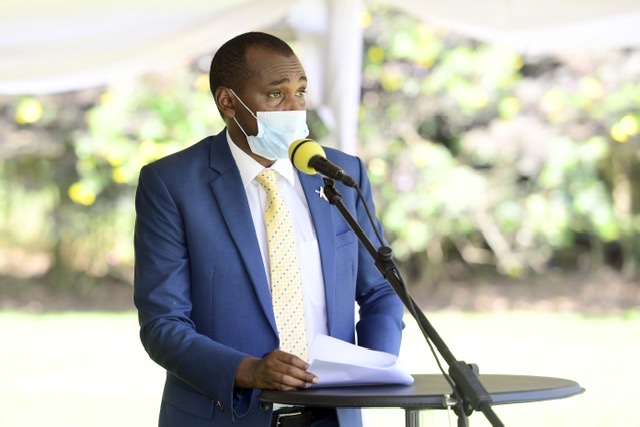
The Minister of Gender, Labour and Social Development, Frank Tumwebaze has announced that Government is reforming the requirements of companies licensed to export labour.
This comes as many Ugandan domestic workers especially in the Middle East continue to report cases of inhumane treatment by their masters.
Speaking at the commemoration of International Labour Day at State House Entebbe on Saturday, Tumwebaze said that working with International Labour Organization (ILO) and International Organization for Migration (IOM), the Government is endeavoring to promote ethical practices for labour recruitment.
“Working with our partners, IOM and ILO, we are trying to promote ethical practices of recruitment of our people especially the migrant workers,” he said.

Tumwebaze acknowledged some unfortunate cases that happen, including; mistreatment of distress workers and announced various measures to curb the vice.

“We are reforming the requirements for the licensed companies. We need them to increase their insurance bond to ensure that a worker they have taken gets a situation that is a distress to one, then we have funds to call on to repatriate that person.”
The Minister also noted that his Ministry is trying to seek the support of Parliament and Cabinet to put more money in skilling of Ugandan youths so that they can be recruited with skills possessed.
“We cannot continue to export raw labour which definitely does not become appealing to the employers out there,” he said.
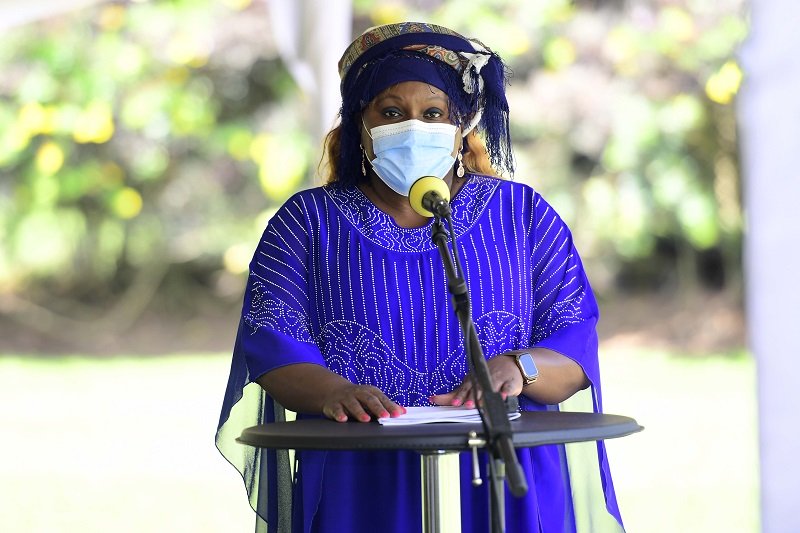
The Workers’ representative in Parliament and Secretary General of Central Organization of Free Trade Unions (COFTU), Sam Lyomoki had earlier stated that Uganda earns as much as 1.4 billion dollars in form of remittances from laborers abroad.
Despite the 1.4 billion dollars sent back home in form of remittances, Lyomoki decried limited frameworks for monitoring the implementation of labour commitments and processes from different bodies.
“The Diaspora Services Department in the Ministry of Foreign Affairs works towards harnessing external labour contribution to national development, and not to cater for their wellbeing. The Ministry responsible for labour has tried to establish some policies, but still workers die at the hands of their employers, others have been sexually harassed while others have been subjected to inhumane treatment,” he said.
“We therefore pray that additional measures through legislation are done; that we could have labour attaches in different points of labor externalization so that we can make labour opportunities safer, generate capacity for effective negotiations with the Government and enhance capacity for individual worker’s growth,” he added.
Lyomoki asked for support to carry out pre-departure and integration induction Programmes for departing and retuning workers in order to enforce best practices.
President Museveni said he does not support externalization of labour, adding that the reason as to why many Ugandan migrant workers are suffering is because Government officials responsible to supervise labour externalization have allowed foreigners to open up companies in Uganda.
He noted that if it was only Ugandans owning labour export companies, they could easily be held to account in case anything went wrong.