

Kampala, Uganda | URN | Access to sexual and reproductive health services for adolescents and young people in underserved districts is gradually improving following the rollout of a new national initiative that is bringing information, services, and support closer to communities.
The SAY Plus+ Programme, launched with support from the United Nations Population Fund (UNFPA) and development partners, is strengthening sexual and reproductive health and rights (SRHR) services for adolescents and young people aged 10 to 24 years, with a focus on hard-to-reach and vulnerable groups, including refugees, out-of-school youth, young people with disabilities, and those in humanitarian and post-conflict settings.
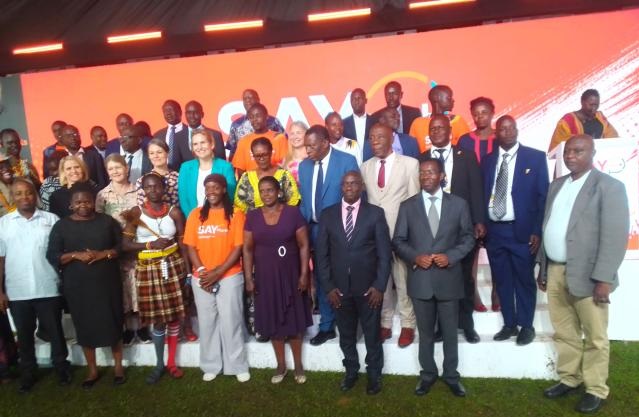
Many young people in regions such as West Nile say distance to health facilities and lack of accurate information have long hindered access to essential services. However, new community-based interventions and youth-friendly spaces are beginning to close that gap. “As a young person from Moyo District, I have always wanted to know about my body, my health, and my future, but our health facilities were very distant, and we were unable to access services. But with the SAY Plus+ program coming in, services were brought closer to us,” said Jovia Dranzoa at the launch of the programme at Makerere University.

Dranzoa explained that the initiative uses community outreach activities, including “flash mobs” and peer-led awareness campaigns, to encourage young people to openly discuss SRHR issues and learn from trained peer educators. She also highlighted the establishment of youth-friendly corners in health facilities as a key improvement. “We can have a safe space where we can share our issues with peer educators who are trained and also get information concerning sexual and reproductive health and rights,” she said.
Brenda Katushabe, a law graduate from Uganda Christian University and founder of the Own Your Future Campus Initiative, said the programme is helping bridge long-standing information gaps that previously left many young people unable to make informed choices. “Initially, I didn’t even know what SRHR meant. Information may have been there, but it was not easily accessible. Now young people can know their rights, access correct information, and make informed choices,” Katushabe said.

She added that the initiative is also improving reporting mechanisms for gender-based violence and sexual harassment, which many young people previously struggled to access. “Young people used to suffer and become victims of different health challenges like gender-based violence and sexual harassment, and they did not know where to report. This program is coming on board to provide reporting mechanisms and accessible youth-friendly services,” she said.
Katushabe further noted that peer-to-peer engagement remains central to the programme’s success. “It is easier for a young person to speak to another young person,” she said. “If young people are empowered with information, it can prevent many problems.” The State Minister for Primary Health Care, Margaret Muhanga, said the programme is expected to deliver measurable results by aligning with government systems and priorities.
“We need discipline, commitment, accountability, and effective solutions. Health investments must translate into visible, measurable results for Ugandans,” Muhanga said. She noted that although Uganda has expanded maternal health services, adolescent pregnancy rates remain high, averaging 24 percent, and called for stronger involvement of families, schools, and communities in addressing the challenge.
The programme is being implemented in 13 districts across five sub-regions, including support to regional referral hospitals in Jinja, Mbale, Moroto, Yumbe, Arua, and Gulu. It is backed by a USD 50 million pooled fund from Denmark, Sweden, the Netherlands, and Iceland, and will run from 2024 to 2030. UNFPA Uganda representative Kristine Blokhus said the initiative marks a shift from fragmented interventions to a coordinated national strategy that places young people at the centre of design and delivery.
“Through our partnership with the Government of Uganda, development partners, and implementing partners, we are investing not only in services, but in the systems, communities, and environments that enable adolescents and young people to thrive not only today but also in the future,” Blokhus said.
The post West Nile youth find safe spaces for SRHR information appeared first on 1:.