

Inter-Schools Coding Competition Empowers the Next Generation
Kampala, Uganda | DAVID MUWONGE | The Inter-Schools Coding Competition (ISCC) this year will be expanded to include up to 500 secondary schools – up from just 120 – across the country. Launched to provide young Ugandans with early exposure to advanced technological skills, the ISCC aligns closely with the nation’s digital transformation agenda, inspiring a new generation of innovators and problem solvers.

“Last year, we were able to reach 4,000 students. This year, we are reaching 500,000 students across the country,” stated ISCC Project lead Isaac Prince Sekatawa.
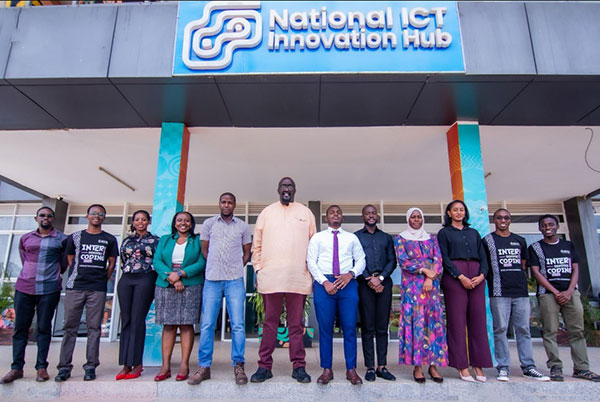
Sekatawa was speaking Tuesday, April 21st, 2026, when the ISCC journey took another significant step forward at the National Innovation Hub in Nakawa, with the Permanent Secretary of the Ministry of ICT & National Guidance, Dr Aminah Zawedde, and Alan Kasujja, Executive Director of the Uganda Media Centre, reaffirming the government of Uganda’s commitment to empowering Uganda’s youth through digital skills.
The ISCC bridges the gap between formal classroom ICT education and real-world digital skills by using a structured, competition-based learning approach. This hands-on model ensures that students are not only learning theory but also applying their knowledge to practical challenges. It now stands as Uganda’s largest and most impactful National Advanced Technology Initiative for secondary school students.
At the meeting, Dr Zawedde stated that digital transformation begins with equipping young people with skills in coding, analysis, and problem-solving, noting that these competencies are now as essential as learning English and Mathematics. She stressed that infrastructure, tools, and online services are key to national progress, adding that data protection and cybersecurity are necessary to ensure digital solutions have a real impact.

The Permanent Secretary noted that digital skilling goes beyond rhetoric, describing it as a key driver of innovation, entrepreneurship, and meaningful opportunities for Uganda’s youth.
Alan Kasujja noted that, “So we as the media centre are excited to support anything that has an impact on communities. Anything that seeks to show young people where the opportunities are. We are going to support those groups.”
He added, “That’s why we are associating ourselves with a competition that showcases coding skills from across the country. We are giving them visibility.”

Kasujja promised that the Uganda Media Centre aims to offer strategic support to anyone seeking assistance, ensuring individuals receive the visibility their projects require. He explained that the Centre will guide people to ensure their projects receive the attention they seek.
Kasujja noted that the secondary schools project is reaching people in villages and remote schools across Uganda. He emphasized that some of the best-performing schools are in very remote areas, such as Kigezi, and expressed confidence in the initiative, emphasizing its widespread and positive impact throughout the country.
So far, ISCC and its partners have trained over 4,000 students from 120 schools across Uganda in Python programming, a foundational skill for careers in data science, artificial intelligence, machine learning, and web development. These numbers reflect the growing excitement and ambition among Uganda’s youth.
Last year’s competition, held at the Kololo Ceremonial Grounds on December 12th, 2025, marked the program’s successful launch. Standard High School Zzana emerged as the champions, setting the stage for an even more exciting edition this year.
“So, we are excited that this year we are happening again. It’s happening again, and we look forward to seeing the permanent secretary as our chief guest at the Kololo Independence Grounds,” Prince Sekatawa remarked.