

By Yomiisa Conerstone
In every free society, the law of the land prevails over all the other structures in such a society.
It is precisely the law that makes the society free and without the law the society can never be free. However, those who hold power are using the same law to advance their personal demands against the individual rights which are meant to be protected by the law as its sole purpose.
In Uganda, the 1995 constitution is the supreme law of the land and it’s in this supreme law of the land that the bill of rights is enshrined.

Literally, every individual person in Uganda is entitled to the enjoyment and protection of the fundamental and other individual or human rights and freedoms that are expressly or impliedly provided for in the constitution.

These rights are inherent and not granted by the State
This implies that rights of individual persons cannot be unlawfully taken away by the State since they are not granted by the State.
Individual rights are not exhaustively provided for in the constitution. This does not lessen the magnitude of the other rights of an individual that are not explicitly spelt out in the constitution.
This is why the constitution of Uganda under Article 45 provides that the rights specifically mentioned are not to be regarded as excluding others not specifically mentioned. This provision that the Bill of Rights is not exhaustive forms the basis for applying rights not explicitly mentioned.
This assertion was discussed and approved in the constitutional court of Uganda in the case of Uganda Law Society & Anor v The Attorney General, to include right to appeal, which is not included in the Ugandan Bill of Rights, among the rights protected by the Constitution
Despite the existence of the individual rights in Uganda, the law itself has been used to suppress these rights yet it is meant to be a tool to protect and safe guard the individual rights. In the words of Fredric Bastiat.
‘The law becomes a weapon of those in power, rather than a tool to protect the rights and freedoms of individuals’. Every individual person in Uganda has a right to freedom of expression.
This right is recognized and protected by many international conventions and declarations because it constitutes one of the essential foundations of a free society.
This right extends to expressions on social media platforms and other online and internet platforms for example twitter, facebook among others.
However, because of the overwhelming fear of the government and its institutions to provide accountability to the people, the law itself is being used as a machinery to take away the right of expression from the people.
The parliament of Uganda tabled the computer misuse amendment bill 2022 with provisions that technically violate the right of freedom of expression that has been enjoyed by people for time immemorial. Cassin R said, ‘No one has the power to control his internal thoughts and feelings nor to prevent him from outwardly expressing his thoughts and feelings…’
This right to express oneself is being taken away by the law itself.
The law is being used in Uganda by those in power to maintain themselves in power against the will of the people.
Individual persons have a right to express their will and consent on who shall govern them and how they should be governed.
This will of the people had been reflected in the constitution when it provided for seventy-five years as a maximum for one to qualify for election as the president. Despite the continuous cries of the majority of the people not to amend the constitution, the law was invoked and used to suppress their rights and accommodate the wishes of those in power.
Individual persons are entitled to bail due to the doctrine of presumption of innocence.
The grant of bail in Uganda is at the discretion of the judges, which implies that it is the judge to decide whether to release a person on bail or not.
These Judges are appointed by the President on the advice of the Judicial Service Commission, which commission consists of the members who are appointed by the same president
This technically infers that the president controls the law on bail and he can thus decide who is to be released on bail and who is not to be released.
This explains why the strong hold opposition members of parliament specifically Ssegirinya and Ssewanyana failed to secure bail despite their continuous attempts to be released on bail given their health conditions and the stature they hold in the country.
Conclusion
The law in Uganda has lost its purpose and the individual rights are now at stake as their extinction has become inevitable.
In the words of Frederic Bastiat, ‘The law has not only been turned from its proper purpose but made to follow an entirely contrary purpose’.
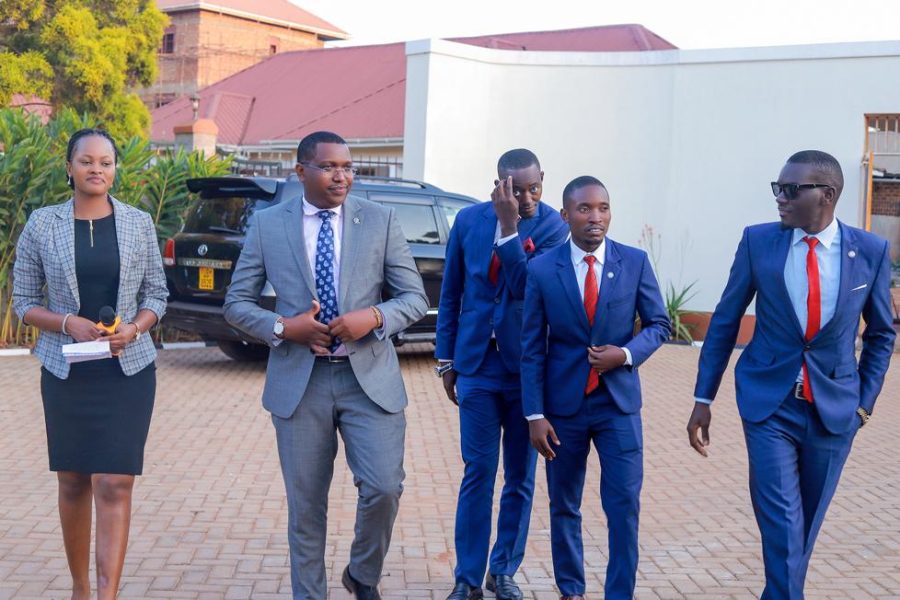
(The Author/Writer Is A Student Of Law At Nkumba University)