

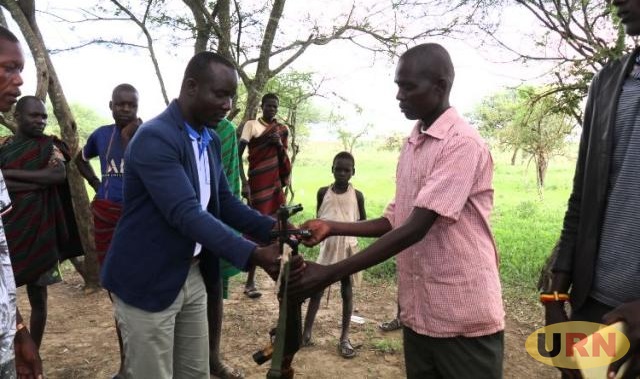
Moroto, Uganda | URN | Armed Karamojong warriors are reportedly taking refuge in game reserves across Karamoja, where they are not only evading security forces but also killing wildlife for food as they plan fresh attacks on communities.
Local leaders and security officials say the dense, bushy terrain within the reserves has made it difficult for security teams to track and flush out the suspects, giving the warriors a strategic advantage.
In Napak District, leaders say the situation is worsening. John Paul Kodet, the LC5 Chairperson of Napak, says the warriors have established a stronghold in the Matakori area near the Bokora-Matheniko Game Reserve.

He explains that the area has become a hideout for some of the most notorious warriors from Kotido, who are blamed for terrorizing communities in Napak and the surrounding districts.
Kodet adds that the same location is now being used as a base to plan attacks. He cites a recent incident in which the warriors raided six donkeys, killing one along the way before abandoning it.

Kodet urged a coordinated security operation to surround the reserve and flush out the armed groups. He warns that the warriors are heavily armed, continue to threaten local communities, and are increasingly relying on wildlife for survival, hunting animals at night as they prepare for raids.
Meanwhile, Moses Longolemoe, the Chairperson of the Kaabong Kraal Leaders Association, confirms that many of the warriors hiding in the reserves are believed to be Jie from Kotido.
He says the groups move at night using torches to hunt wild animals, often using firearms, raising concerns about both insecurity and illegal wildlife killings.
Longolemoe adds that some of the meat is even sold in open markets at trading centres.
In response, the UPDF 3rd Division Commander, Maj GenWilberforce Sserunkuma, says he has directed brigade commanders to intensify operations in all suspected hideouts within the game reserves.
He stresses that it is unacceptable for such areas to harbour criminals while communities continue to suffer.
Sserunkuma has also ordered closer coordination between the military and wildlife authorities to plan joint operations aimed at clearing the reserves of armed groups.
He is further urging local leaders and security commanders to work more closely together to address the situation proactively.