

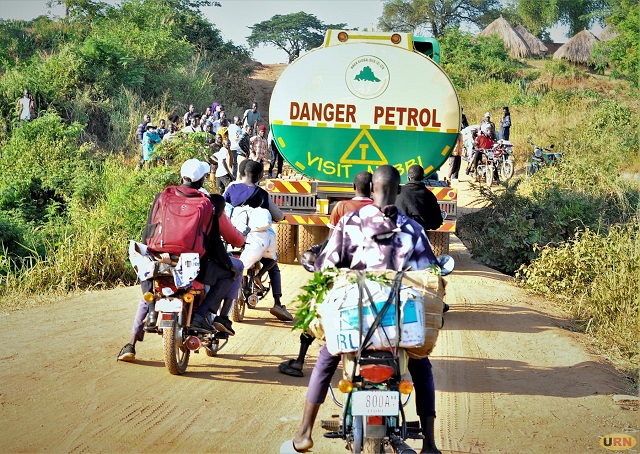
Nebbi, Uganda | URN | Dilapidated bridges and deteriorating roads across the West Nile sub-region are disrupting trade, increasing transport costs and discouraging investment, with businesses and residents calling for urgent government intervention. Across Nyaravur, Angal Town Council, Parombo, Akworo and Erussi sub-counties in Nebbi District, bridges built more than three decades ago have fallen into disrepair. Collapsed approaches, cracked structures and missing guardrails have turned key transport routes into dangerous bottlenecks, slowing the movement of people and goods.
During the rainy season, bridges such as Ayilla, Pacing and Akuru become nearly impassable, leaving heavy trucks stranded for hours or even days along the Nyaravur–Parombo, Nebbi–Goli, Zombo and Vurra road corridors. Traders say the poor road network has become a major obstacle to business, forcing transporters to spend more on fuel, vehicle repairs and security while delaying deliveries.
Marvin Okaba, the Deputy Managing Director of Rock Global Oils Limited, said the poor condition of roads linking Nyaravur, Parombo, Goli and Vurra has significantly affected the company’s operations. He explained that the company, which has been transporting fuel and other goods since 2008, spends a substantial portion of its earnings repairing trucks damaged by the poor road network.

“The company has 26 trucks, and each truck loaded with fuel carries cargo worth about Shs64 million. When a truck gets stuck on muddy roads, the company incurs huge financial losses and faces serious security risks,” Okaba said. He noted that journeys that should take less than an hour often take several hours during the rainy season, disrupting fuel supplies to service stations across the region.
“Bad roads and dilapidated bridges slow everything down, literally and economically. The longer our trucks spend on the road, the more fuel they consume, increasing transportation costs and reducing profitability,” he added. Nebbi District Chairperson George Othuba acknowledged that many of the bridges along the Nyaravur–Angal–Parombo road have outlived their design life and are no longer suitable for heavy vehicles.

He said the bridges have developed cracks and damaged guardrails but remain in use because there are no alternative routes connecting Parombo to Nebbi. Othuba said several accidents have been linked to the deteriorating bridges, including one that claimed the life of prominent driver Adubango Mussisi after his vehicle plunged off Ayilla Bridge. He said the district lacks the financial capacity to replace the ageing bridges.
“The district receives only about Shs1 billion for road maintenance, which does not cater for bridge construction. We have identified eight bridges that require replacement, each estimated to cost about Shs2.8 billion,” Othuba said. Drivers also say the poor infrastructure poses a danger to motorists and delays emergency services. Sam Olegmungu, a driver, said many roads become impassable whenever it rains, forcing motorists to spend hours negotiating muddy sections and damaged bridges.
“There are problems when patients are referred from lower health facilities to either Angal Hospital or Nebbi Hospital because more time is spent on the roads, while the bridges become slippery during the rainy season,” Olegmungu said. He added that poor roads and bridges continue to claim lives and undermine economic development by making transport more expensive and unreliable.
Night Akumu, a resident, said repeated appeals for the rehabilitation of the Nebbi–Goli and Zombo–Vurra roads have gone unanswered despite their importance to regional trade. “People are not only losing their lives because of reckless driving, but because the roads and bridges are in a poor state. Some roads are so narrow that drivers struggle to safely pass each other,” Akumu said.
Among the priority structures residents want the government to reconstruct are Ayilla Bridge on the Nyaravur–Angal–Parombo road, Acodho Bridge linking Parombo Town Council to the Democratic Republic of Congo, Pacing Bridge, Akuru Bridge, Kibira Bridge connecting Nebbi and Kucwiny sub-counties, Abindu Bridge linking Nebbi Municipality to Erussi Sub-county, and Namthin Bridge. Residents and business leaders argue that upgrading the region’s road and bridge network would lower transport costs, improve access to markets and health services, attract investment and unlock West Nile’s economic potential.