

Kampala, Uganda | URN | Concerns over threats to constitutional freedoms, economic stability, and regional integration have intensified calls for Parliament to reject the proposed Protection of Sovereignty Bill, 2026.
A coalition of leaders from Teso, Lango, Bugisu, civil society organisations, financial institutions, and statutory bodies warned that the Bill, in its current form, could undermine Uganda’s constitutional order and weaken democratic governance.
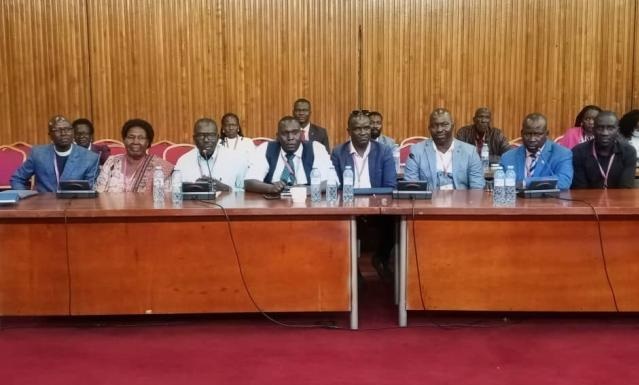
The concerns were presented on Friday, April 24, during a parliamentary committee session chaired by Stephen Mugabi Baka, where stakeholders submitted memoranda and oral arguments on the draft law.

Leading the Teso delegation, Benson Ekwee Ocen of the Public Affairs Center of Uganda said sovereignty is fundamentally a constitutional matter and should not be legislated through a single Act of Parliament.
“Sovereignty is a constitutional matter, the Constitution is the only law that can comprehensively protect it. Attempting to legislate it through a single Act risks oversimplifying a fundamentally complex principle,” he said.

He argued that while the issues raised in the Bill are valid, the approach is flawed and called for a more targeted framework similar to foreign agent registration models used in other jurisdictions.
A key concern raised by multiple stakeholders was the concentration of enforcement powers within the executive, which they warned could enable arbitrary decision-making and weaken accountability.
Ocen further cautioned that the Bill could be used to control civic engagement under the guise of transparency, thereby eroding democratic freedoms.
Several submissions also challenged the Bill’s broad definition of a “foreigner,” which includes Ugandan citizens living abroad, warning that it could disenfranchise the diaspora and disrupt economic and cultural ties.
Teso leaders further argued that the Bill risks undermining regional integration within the East African Community by restricting cross-border trade, cultural exchange, and institutional cooperation.
The Uganda Human Rights Commission, represented by commissioner Alex Omara, said the provisions would reverse gains in civic participation, including diaspora voting rights.
“We have consistently advocated for Ugandans in the diaspora to enjoy full civic rights including voting. This bill reverses that progress,” he said.
The Commission also raised concern over harsh penalties and vague offences that could be interpreted broadly and used to criminalise legitimate activity.
The Uganda Bankers Association warned that the Bill could disrupt financial systems and deter investment. Executive Director Wilbrod Owor said restrictions on foreign funding and overlapping regulatory requirements could weaken capital mobilisation and economic growth. Civil society groups, including the Centre for Constitutional Governance, also warned that provisions limiting public participation could violate both Uganda’s Constitution and international obligations under human rights treaties.
Leader of Opposition Joel Ssenyonyi described the Bill as “economic suicide,” warning it could drive away investors and donors while worsening unemployment.
He argued that existing laws already address concerns raised by proponents of the Bill.
In response, committee chair Stephen Mugabi Baka acknowledged gaps in the draft law, particularly in defining “foreign interest” and “subversive activity,” and said Parliament must determine whether to amend or reject the Bill.
Across submissions, stakeholders recommended either withdrawing the Bill entirely or returning it to the executive for substantial redrafting to ensure clarity, balance, and constitutional compliance.
Parliament is expected to compile a report on the consultations, setting the stage for a wider national debate on balancing sovereignty, economic stability, and democratic freedoms.