

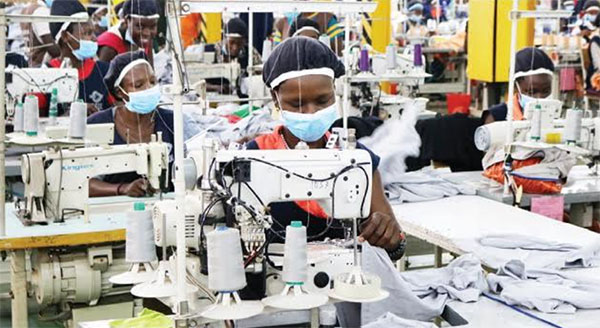
Most Ugandans are employed, but the vast majority remain trapped in informal, low-paid and insecure work

Kampala, Uganda | JULIUS BUSINGE | Uganda’s latest labour market data suggests that while most people are working, many are doing so in jobs that are insecure, low-paying and outside the formal economy.
The Labour Market Survey 2025, released by the Uganda Bureau of Statistics (UBOS) in Kampala on April 17, shows that informal employment continues to dominate the country’s job landscape.
Based on a nationally representative sample of more than 10,000 households and thousands of businesses, the survey estimates that about 7.35 million Ugandans are employed in informal businesses alone. For many, these small, often household-run enterprises remain the main source of income.
Analysts say this reflects both the strength and the limitations of Uganda’s economy. On one hand, the informal sector has shown a capacity to absorb large numbers of workers, particularly in trade, agriculture and services. On the other, it highlights a shortage of formal jobs that offer stable incomes, contracts and social protection.
The survey also finds that informality is widespread, cutting across regions and sectors. Even within registered businesses, some workers are employed informally, suggesting the trend is deeply embedded in the broader economy.

Small formal sector
By contrast, the formal sector remains relatively small. Businesses reported about 155,000 job vacancies, roughly half the 305,000 vacancies recorded in informal enterprises. Vacancies typically arise from resignations or job losses, but the figures point to where most opportunities are concentrated.
Despite this, Uganda’s labour market is not stagnant. A large share of the working-age population is engaged in some form of economic activity, according to the survey’s employment-to-population data.
However, economists caution that headline unemployment figures can be misleading. The survey uses international definitions, counting only those actively seeking and available for work as unemployed. In practice, many Ugandans cannot afford to be without work, meaning underemployment is often more common than outright joblessness.
Time-related underemployment—where people work fewer hours than they would like—is particularly evident in rural areas and among women. This suggests that while jobs exist, they are often insufficient in terms of income or productivity.
Young people face additional challenges. Although many are economically active, a significant number are concentrated in low-productivity informal work. The transition from education into stable employment remains difficult, especially in urban areas.
Data to inform policy direction
Uganda’s Permanent Secretary at the Ministry of Gender, Labour and Social Development, Aggrey David Kibenge, said the findings would inform government policy.
“Such data is good for planning, budgeting and running a transparent government,” he said, adding that more needs to be done to support job creation and improve working conditions.
There are also notable differences between rural and urban labour markets. Rural areas tend to have higher participation rates, largely driven by subsistence farming. Urban areas, while offering more diverse opportunities, also record higher unemployment—particularly among young people.
Some economists argue that the dominance of informal employment should not be seen purely as negative. They say it provides flexibility and a pathway into entrepreneurship, especially in a fast-growing population where formal jobs are limited.
The challenge, they say, is to improve productivity and earnings within the informal sector, while helping businesses transition into the formal economy. This could involve better access to finance, skills development and simpler regulation.
Others point to deeper structural issues, including slow industrialisation and a mismatch between education and labour market needs. Manufacturing, for example, still plays a relatively small role in job creation.
UBOS Executive Director Chris Mukiza acknowledged some limitations in the data, citing restricted access to certain workplaces and non-response from some employers during the survey. He added that continued engagement helped improve coverage.
The survey also does not fully capture unpaid household work, meaning some forms of economic contribution—particularly by women—may be underreported.
Nevertheless, the government officials say the findings will feed into national planning. State Minister for Planning Amos Lugoloobi said programmes such as the Parish Development Model, industrial parks and Operation Wealth Creation are expected to expand job opportunities and bring more people into the money economy.
Joseph Enyimu, the Commissioner for the Economic Development Policy & Research Department in the Ministry of Finance said the scale of informality shows there is still work to be done, particularly in organising workers in key sectors such as agriculture.