

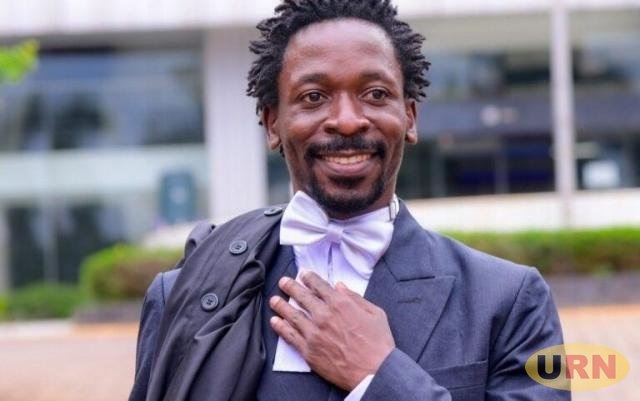
Kampala, Uganda | URN | The Uganda Law Society (ULS) has called for police investigations into journalist Andrew Mwenda over remarks in which he reportedly defended the use of abductions, secret detention facilities, and corporal punishment by security forces as measures to enforce discipline and fight corruption. In a statement issued on November 17, 2026, ULS President Isaac Ssemakadde accused Mwenda of publicly advocating practices that violate Uganda’s laws and constitutional protections against torture, unlawful detention and other forms of abuse.
The statement follows an interview between Mwenda and Terry Kahuma on the Simply Legal programme, released on November 16 under the title Andrew Mwenda: Why Abductions, Torture & the Basement Are Necessary. The lawyers’ body argues that Mwenda’s remarks go beyond political commentary, saying they amount to encouragement and support for unlawful practices, particularly his reported endorsement of soldiers being deployed to enforce order through beatings, abductions and detention outside the judicial system.
ULS wants the Director of Public Prosecutions (DPP) to direct police to investigate whether Mwenda’s statements constitute criminal offences under Uganda’s anti-torture, anti-terrorism and penal laws. The demand comes amid heightened tensions over reported abductions in Kampala, with the Uganda Law Society separately demanding the release of three people it says went missing in separate incidents over the weekend.

They include political analyst and technology expert Leonard Ronald Egesa, Students Brotherhood President David Musiri and trainee advocate Prosper Julian Ahabwe. The Society says Egesa was taken from the premises of Akaboozi FM/Radio One on November 13, while Musiri was reportedly seized from his home in Makindye the following day. Ahabwe reportedly disappeared while travelling to Jinja Road Police Station to visit a client.
The Society has linked the disappearances to what it describes as an increasingly hostile environment for critics of Gen. Muhoozi Kainerugaba, the Chief of Defence Forces and leader of the Patriotic League of Uganda (PLU). It has accused security agencies of failing to account for people allegedly held in undisclosed detention facilities. Concerns about alleged enforced disappearances and the use of unofficial detention facilities have also featured in communications by United Nations human rights experts.

A 2025 communication to the Ugandan government cited reports of people being held incommunicado at unidentified locations or unauthorised detention facilities commonly referred to as safe houses.
In its statement, the Society cited Section 8 of the Prevention and Prohibition of Torture Act, 2012, which criminalises procuring, aiding, abetting, inciting, recommending or encouraging torture, where the person knows or has reason to believe that the support will be used in connection with the preparation or commission of torture.
ULS argues that Mwenda’s reported recommendations for soldiers to beat civilians and the use of underground detention facilities could fall within the provision. The Society also cited Sections 19 and 20 of the Penal Code Act, which provide for criminal liability for people who aid or abet offences or participate in a common unlawful purpose where the commission of an offence is a probable consequence. It further wants investigators to examine provisions of the Anti-Terrorism Act and the International Criminal Court Act, particularly those dealing with aiding and abetting offences and individual responsibility for international crimes.
However, the invocation of these laws does not automatically establish criminal liability. Investigators and prosecutors would have to establish the specific elements of the alleged offences, including the requisite knowledge, intention and connection to criminal conduct. No charges against Mwenda arising from the interview had been announced in the Society’s statement. Beyond calling for investigations into Mwenda, ULS wants Gen. Muhoozi, the PLU Secretariat and individuals associated with the organisation to publicly disassociate themselves from the remarks.
The Society also wants the UPDF, Police and other security agencies to immediately stop what it describes as abductions, secret detentions, corporal punishment and other extrajudicial practices. It has demanded that authorities disclose the whereabouts and condition of people allegedly held in secret detention facilities, produce them before competent courts or release those being held without lawful process. The Society further wants the Uganda Human Rights Commission to investigate both Mwenda’s remarks and the alleged pattern of abductions and secret detentions.
It argues that the public endorsement of such practices should not be dismissed as political analysis, particularly where the statements appear to advocate bypassing established judicial procedures. In the statement, Ssemakadde maintained that neither public interest, the fight against corruption, nor national development could justify torture or unlawful detention.
“No superior officer may invoke ‘public interest,’ ‘anti-corruption,’ ‘development’ or succession as a defence under the Prevention and Prohibition of Torture Act or the Constitution,” he said. He added that the normalisation of secret detention facilities, physical punishment and enforced disappearances threatens the country’s constitutional order.
“The rule of law does not survive the normalisation of the basement, the stick and the disappearance. The Society will continue to document, challenge and resist it,” Ssemakadde said.