

In a major move to accelerate its energy goals, the Government of Uganda has secured a $2 billion (approximately Shs 7.6 trillion) loan from global energy trading giant Vitol Bahrain E.C. The funding is earmarked for massive infrastructure developments, specifically targeting oil roads, a domestic refinery, and the expansion of the country’s petroleum storage and transport network.
Key Highlights of the Vitol-Uganda Deal
-
Total Loan Amount: $2 billion (Shs 7.6 trillion).
-
Lender: Vitol Bahrain E.C. (the same partner currently supplying Uganda’s fuel).
-
Loan Term: 7-year tenor (84 months) with a 2-year grace period.

-
Interest Rate: 4.92%.
-
Primary Goal: Funding the “Oil Roads” project, the Kabaale refinery, and pipeline extensions.
Financing Uganda’s “Oil Roads” and Energy Independence
The loan, presented to Parliament by State Minister for Finance (General Duties) Henry Musasizi, marks a shift toward “non-traditional” financing as Uganda nears its 2026 “First Oil” target.
A significant portion of the funds—roughly $800 million (Shs 3.0 trillion)—is dedicated to the construction and upgrade of national roads. These “oil roads” are critical for the logistics of moving heavy equipment and personnel to the Albertine Graben region, where commercial production is set to begin.
Strengthening the Uganda National Oil Company (UNOC)
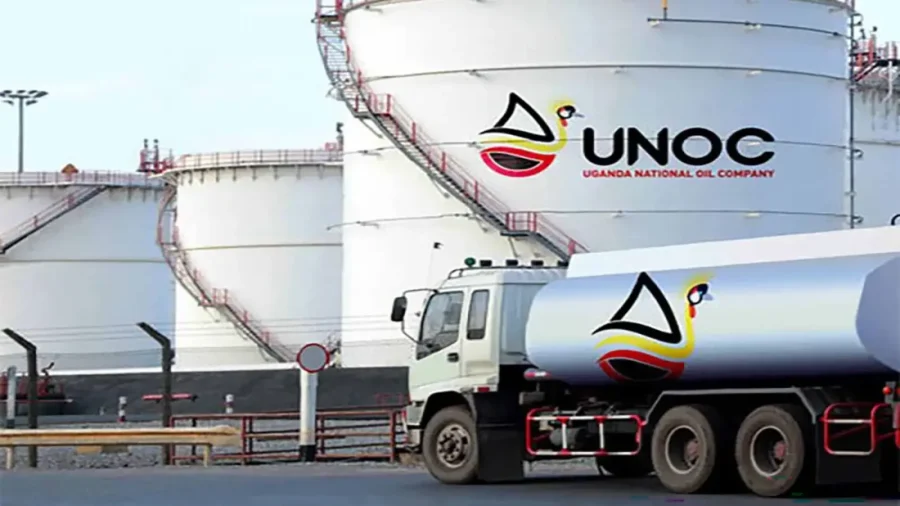
The Uganda National Oil Company (UNOC) will be the primary beneficiary and manager of these funds. Beyond road infrastructure, the $1.2 billion balance will support:
-
The Uganda Oil Refinery: Boosting the 60,000-barrel-per-day facility in Hoima.
-
Petroleum Storage Terminals: Enhancing national fuel security.
-
Pipeline Extension: Stretching the petroleum product pipeline from western Kenya to Kampala.
Economic Impact and Debt Management
While the $2 billion loan adds to Uganda’s growing public debt, the Ministry of Finance justifies the move through projected returns. UNOC is expected to generate upwards of $5.6 billion (Shs 21.3 trillion) from these projects over the coming years.

By partnering with Vitol—a company already embedded in Uganda’s supply chain as the sole supplier of refined products—the government aims to streamline the transition from an importer to a self-sufficient oil producer.
Why This Matters for the Region
This investment is a cornerstone of the East African Crude Oil Pipeline (EACOP) ecosystem. By improving internal logistics through the “oil roads” project, Uganda is positioning itself as a regional energy hub, capable of supplying refined products to neighboring South Sudan, Rwanda, and the Democratic Republic of Congo (DRC).