

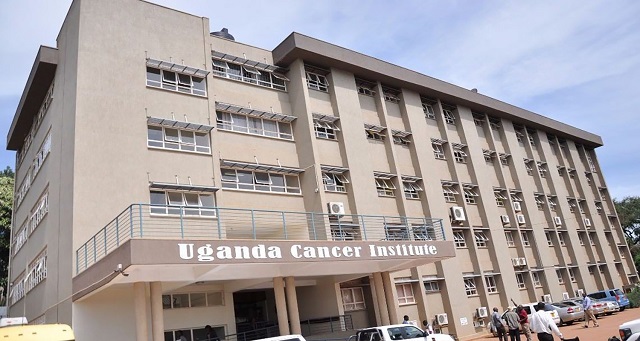
Kampala, Uganda | URN | When Uganda Cancer Institute (UCI) has discharged its second patient to have undergone a successful bone marrow transplant to treat multiple myeloma – a type of blood cancer. Health Minister Dr Chris Baryomunsi said it was an example of the government’s recent efforts not just to cut the number of those seeking care abroad but also part of a bigger plan of attracting more foreign patients.

But, experts say, achieving this will take the country more than just having procedures done.
Philemon Okillong, a research analyst at the Economic Policy Research Center (EPRC) told URN that the center conducted an assessment of Uganda’s health service exports potential in which they also did an analysis of foreign patients who seek care in Uganda. They found most patients originate from East African Community (EAC) countries.
A report by the Center shows, in 2024, for instance, about twenty thousand patients sought care in Uganda earning the country about $26 million dollars, with the majority at 86 percent receiving services at the Cancer Institute. At least 53 percent of the foreign patients at the UCI were from the neighboring South Sudan and 25 percent from the Democratic Republic of Congo (DRC).

According to Okillong, this finding was not surprising since the UCI has been designated the region’s tertiary center of excellence for oncology training and care by the East African Community. Generally, he said there has recently been an increase in the number of foreign patients seeking care in Uganda. This was also observed during the recent Ebola Bundibugyo outbreak. Fifteen of the twenty total cases confirmed for the disease in Uganda were from the neighboring DRC.
However, while this is something worth applause, Dr Nixon Niyonzima the Director of Research and Training at UCI, says the rise in numbers has not necessarily come with a matching increase in foreign exchange from medical tourism.
He says the quality of patients coming to the institute are not the type that would spend that much. Comparing with other countries that have invested in growing medical tourism, he says Uganda needs to start taking lessons from what is done elsewhere, citing national narriers like Uganda Airlines being integrated with the hospital and offering information on what is being offered.
For some patients, he says, it’s not just the treatment and the medical expertise that attract them to seek care in a certain facility but the ambience. Unfortunately, he says, while the medical care in the institute is top-notch, provided by highly qualified specialists, they still have to deal with crowds of patients and underdeveloped infrastructure.
Niyonzima gives an example of radiotherapy, a key cancer intervention, and reveals that the World Health Organisation recommendation is for the country to have one machine per one million population, but the institute operates with only six such machines, leaving the country with a gap of about forty such machines.
Infrastructure is not all that is a problem. Niyonzima reveals that while the government has for the last over ten years engaged in major infrastructural development, setting up regional cancer centers in a bid to decongest the national facility at Mulago hill, they also remain constrained when it comes to human resources. With only 55 to 60 cancer specialists handling over a hundred types of cancer, he says Uganda needs to invest in hiring high quality human resource, if the country is to attract high quality patients to earn the country reasonable foreign exchange.
For now, even as UCI is holding the biggest number of foreigners seeking care here, Niyonzima says medical tourism is not their priority yet. Their immediate focus is on ensuring the regional cancer centers are operational and Ugandans are accessing care timely.
Commenting about this, Brenda Kabasinguzi, the Manager Export Marketing Services at the Uganda Free Zones and Exports Promotion Authority said for Uganda to make international appeal as a destination for medical tourism, they will need to do a lot of marketing by giving out as much information as possible on what is available in the country.
While generally medical services are not advertised, Kabasinguzi says the country needs to invest in learning how it’s done elsewhere as international markets have certain behaviors and that possession of a resource alone does not automatically translate to gain.
The post Uganda earned $26 million in medical tourism in 2024 but can do much better appeared first on 1:.