

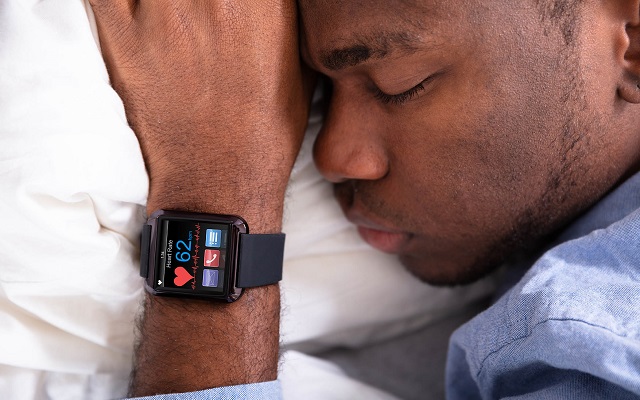
Many chase the dream of optimised slumber to fit around our social lives
Kampala, Uganda | CATHERINE COVENEY & ERIC L HSU | From sleep trackers to wakefulness drugs, the 21st century has seen an influx of new technology that could radically alter the way we sleep.
Many of these new technologies chase the dream of optimised slumber. They promise to help tailor our sleep schedules to fit around our social lives, help us sleep for longer or even skip a night’s sleep altogether.

Here’s how technology is permeating our sleep, and what the future holds.
Smart sleep
Many people already use smart watches, smart jewelry and fitness bands to track their sleep – for example, alarms that wake people up at the optimal point in their sleep cycle and motion sensor apps that analyse sleep patterns.

New ways of tracking sleep could soon include donning a pair of pyjamas embedded with sensors to track changes in posture, respiratory and heart rate, or hugging a robot pillow, whose algorithm creates a breathing pattern to mimic and help you fall asleep.
Meanwhile, care robots have already been trialed in Japan to test whether they could help older people sleep better. Designed to watch over residents at night in care homes, they give staff information on how well the residents are sleeping and let them know if anyone goes for a nocturnal wander.
In your dreams
Dream management technologies are in much earlier stages of development. Scientists believe that sensory stimulation technologies and devices, such as virtual reality visors, could be used for sleep engineering. This new science involves exposing the sleeper to sensory stimuli, such as clicking sounds and vibrations, at specific times in the sleep cycle. The aim would be to improve sleep quality, enhance memory and even treat post-traumatic stress disorder (PTSD).
As for the prospects of “reading” our dreams, progress is being made on this front too. Scientists have taken the first steps towards dream interpretation by measuring brain activity during sleep and using AI to decode visual imagery. Participants in a 2013 study were asked to report the imagery from the dreams after sleeping inside an MRI scanner. Researchers compared scans from people viewing the same types of images while awake and the results showed matching patterns of brain activity.
Nightmare technology
But there is a dystopian side to this story. The technology we already have electric light, smart phones, streaming services can be disastrous for our sleep.
For example, a recent study in the U.S. found that college students often sleep with their mobile phone in bed with them, which means a call, software update or app notification can disturb them. Watching TV or playing video games in bed and staring at our tablets and mobile phone screens into the night has become the norm for many. It can lead to poor sleep and knock our sleep cycles off kilter.
Growing numbers of people are seeking treatments for new sleep conditions such as orthosomnia – the obsessive quest for perfect sleep, similar to an unhealthy preoccupation with nutrition. Some people become so concerned about improving their sleep metrics that it is actually giving them insomnia.
Time to wake up
Sleeping pills have recently been joined by a wave of wakefulness drugs, purportedly safer and more powerful alternatives to caffeine. It seems that they work best on people who are already sleep deprived and don’t have a huge effect on those who are already well rested.
Modafinil is touted for its cognition enhancing effects (especially in sleep-deprived people) and can supposedly keep people awake and alert for several days at a time. Some scientific studies are showing that this may indeed be the case, although results are mixed, with other research showing the effects are similar to caffeine.
The drug was developed to help people with narcolepsy but some have started using it for its focus-enhancing effects. It is a controlled drug (prescription only) in most countries. People who use it for cognitive enhancement or wakefulness are buying it on the black market or getting it from friends who have a prescription.
Modafinil is popular with students – in 2020, Loughborough University researchers found that, of 506 students surveyed at 54 UK universities, 19% had taken cognitive enhancement substances.
But people who take them for non-medical purposes are risking their health. Studies of the safety of these drugs do not consider this type of use. We don’t know what using these drugs to stay awake for long periods of time does to people’s bodies. But we do know that disrupting your sleep pattern (for example, shift work) is linked to health problems such as diabetes and cardiovascular disease.
Recent studies suggest some people are combining sleep and wakefulness pills to manage their body rhythms and optimise their sleep or unwind after a day of hard work. The effects of taking wakefulness pills with other drugs is largely unknown.
In the UK sale or supply of a prescription-only or unlicensed medicine is a criminal offence. Whereas in the U.S., even possession of stimulants without a prescription is a crime.
There’s still so much we don’t know about sleep, and new technology is changing our sleep faster than scientists can keep up with. One thing seems almost for sure: sleep and technology in western society are becoming entangled like never before.
*****
Catherine Coveney is Senior Lecturer in Sociology, Loughborough University and Eric L Hsu is Lecturer in Sociology, University of South Australia
Source: The Conversation
The post Technology is changing sleep appeared first on The Independent Uganda:.