

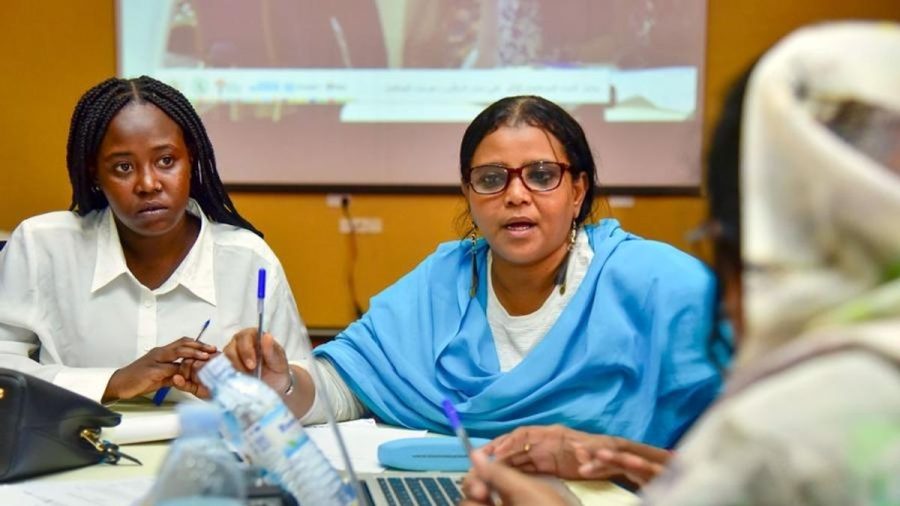
Yesterday marked the commencement of the Sudan Youth Network’s founding conference in Entebbe, Uganda, aiming to facilitate peace-building efforts and foster a civil democratic transformation in Sudan.
Over 160 young participants from various African nations, including South Sudan, Ethiopia, Kenya, Chad, and Uganda, gathered to share experiences and strategies for overcoming social and political divisions.
Concurrently, discussions on post-war justice and security reform unfold in Kampala, while the Gulf Cooperation Council in Geneva urges an immediate ceasefire in Sudan.
Empowering Youth in Peace-building
During the opening ceremony, Haidar Abdallah, a member of the youth network, highlighted the conference’s objectives to enhance political participation among the youth and draw lessons from past political experiences to contribute to ending Sudan’s ongoing conflict. Abdallah underscored the critical role of Sudan’s political forces, community leaders, and clerics in exerting pressure to cease hostilities, emphasizing that peace in Sudan is integral to regional and global stability.

Regional and International Responses
In Kampala, the Civil Democratic Forces alliance (Tagaddum), led by former Prime Minister Abdalla Hamdok, is focusing on justice, transitional justice, and the reform of security and military institutions in Sudan. The Gulf Cooperation Council, represented by Hind Al Muftah, expressed deep concern for the Sudanese people’s plight at the UN Human Rights Council session in Geneva, calling for dialogue, unity, and prevention of external interference that could exacerbate the conflict.

Challenges to Humanitarian Aid
Despite agreements to facilitate the delivery of humanitarian aid to war-affected regions in Sudan, recent refusals by the Sudanese army and the Foreign Affairs Ministry to allow aid into RSF-controlled areas have raised international concerns. Denying civilians access to humanitarian aid is considered a crime against humanity, highlighting the urgent need for a comprehensive solution to the conflict that respects human rights and facilitates recovery.
This convergence of youth-led initiatives, regional alliances, and international diplomacy underscores a collective effort to navigate Sudan out of turmoil. The ongoing conference in Entebbe, along with the strategic discussions in Kampala and diplomatic pressures in Geneva, represent critical steps towards achieving a peaceful, democratic Sudan. The global community watches closely, hoping these efforts will pave the way for lasting peace and stability in the region.