

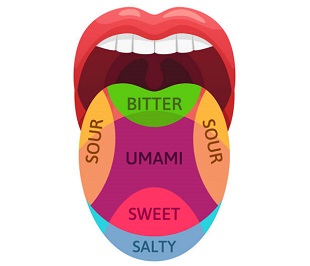
New sixth taste could add to the five basic tastes: sweet, sour, salty, bitter, and umami
ANALYSIS | AGENCIES | A new taste response has been identified in humans. The study, published in Nature Communications in early October, found that humans can also detect ammonium chloride, creating a strong sensation researchers describe as “bitter, salty, and a little sour.”
According to the report, ammonium chloride activates receptors in our cells that detect salty and sour tastes. The new ammonium chloride taste adds to the five basic tastes: sweet, sour, salty, bitter, and umami (the savory flavor similar to monosodium glutamate)

Nicole Avena, PhD, an associate professor of neuroscience at the Mount Sinai School of Medicine and author of `Sugarless’, said the ability to taste ammonia a smell and taste that indicates certain foods, including seafood and meat, have spoiled — may be a survival mechanism.
“The ability to detect this taste, and then avoid it, would be a way to ensure that humans don’t eat spoiled meat or fish that could contain dangerous bacteria that could harm us,” Avena told Healthline.
How does the sense of taste protect us?

Taste serves an important function in people. Taste buds help us experience flavour and decide what to eat, for example, but they also help us detect toxins and keep us safe. According to Avena, when our taste receptors are activated, they send messages to our brain that help us perceive taste and react accordingly.
Based on that information, we can decide if food is good, dangerous, or if we want more, or if we remember it, she explains.
Certain foods might look delicious, but if they’re toxic or on the brink of going bad, our taste buds may sense it first, driving us to avoid it and not get sick from eating it, explained Dana Ellis Hunnes, PhD, a clinical dietitian, assistant professor at UCLA Fielding school of public health, and author of “Recipe for Survival.”
Ammonium can be toxic at high doses, and many vertebrates find the taste of ammonium aversive. It’s believed this prevents them from consuming waste and decaying matter.
“Being able to detect it, especially if it has a bad taste or odor, it would make someone more likely to avoid it and therefore less likely to ingest a toxic substance,” said Hunnes.
In certain scenarios, humans can enjoy the taste of ammonium chloride. In Scandanavian countries, for example, it is used in salty licorice.
Scientists suspect many other tastes haven’t yet been identified.
“There are probably other tastes and flavors that are useful that we haven’t yet detected but we already have ingrained in us biologically,” said Hunnes.
Future studies can help us identify how human taste cells and receptors respond to various substances.
“It is important that we continue to study taste because the profile of possible tastes that humans now encounter is vast thanks to food processing and engineering,” Avena said.
Ammonium chloride actives sour taste receptors
It’s long been known that ammonium chloride produces a taste sensation, however, this is the first study to investigate how our taste buds respond to it. To determine how ammonium activates taste cells, the researchers exposed cultured human cells to ammonium chloride.
They found that the compound activated a specific proton channel known as protein otopetrin 1 (OTOP1), a type of receptor expressed in our sour-taste cells. The researchers also investigated how mice responded to water with and without ammonium chloride.
They found that rodents without OTOP1 receptors did not react to ammonium chloride, whereas mice with OTOP1 receptors avoided the compound. The study suggests that the response in both human and mouse OTOP1 channels is similar to how the receptors reacted to acid. The researchers concluded that OTOP1 receptors are essential for helping humans detect the taste of ammonium chloride.
“This is a new study that suggests in cell cultures and animals that there may be a new taste receptor, OTOP1, that responds to the taste of ammonia,” says Avena.
“This is an important line of work, and it will be interesting to see if additional studies support these preliminary findings,” she added.
*****
Source: Healthline