

Kampala, Uganda | URN | A new report by the Uganda Wildlife Authority says some of the iconic animals in the country, like the lions and elephants, have declined in population amid the recovery of other wildlife species.
The report launched by the Minister of Tourism, Wildlife, and Antiquities, Tom Butime, paints a complex picture. It shows a rebound of some of the key animal and plant species across the key conservation areas, while others continue to struggle due to human and climate change factors.

The State of Wildlife Resources Report 2026 warns about the threats of alien invasive plant species to the country’s conservation efforts. The data looked at the state of wildlife inside and out of the protected areas.
Assistant Commissioner Dr. Caroline Asiimwe described these trends as encouraging, pointing to sustained conservation interventions and improved monitoring.
On the positive side, several key species are rebounding. Buffalo populations have risen by 29%, zebras by 18%, and chimpanzees by 20%.

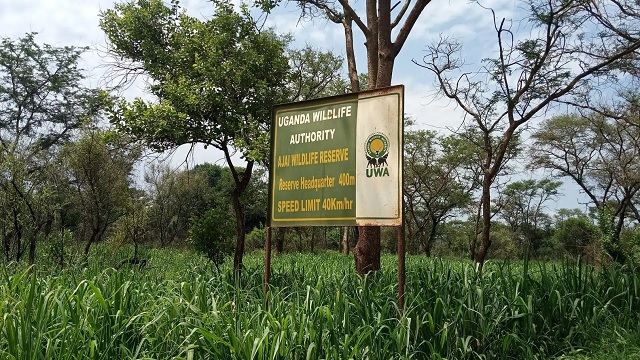
Impalas recorded one of the most significant increases at 69%, while Uganda kobs grew by 5% and elands by 3%. Notably, the Southern White Rhinoceros, once extinct in the country, has registered a 3% increase following reintroduction efforts in Ajai Game Reserve and Kidepo Valley National Park.
On the negative side, it highlights declines in several high-profile species, including elephants, whose population dropped by 4.06%, from 6,621 individuals recorded between 2021 and 2023 to 6,352 in the 2023–2025 period.
Lions have also declined by 7%, with the Kidepo landscape particularly affected. The decline in lion population is an issue of great concern to tour operators who have, in the past, indicated that most tourists have the lion as part of the must-see animal when traveling to Uganda.
The population of the bushbucks and oribi populations is shrinking. The Uganda Wildlife Authority (UWA) further confirmed the extinction of the East African oribi, alongside the already extinct eastern black and northern white rhinos.
Dr. Asiimwe pointed to one key factor complicating population counts: wildlife movement across borders. “We believe wildlife doesn’t know about any boundaries,” she explained. “We have seen them on our tracking devices while they have crossed into Kenya and also our neighbouring countries. So we believe maybe when they come back, the population will increase.” She added that elephants tracked in Mount Elgon have recently returned and settled since November, raising hopes for improved numbers in future censuses.
While Uganda Wildlife Authority concessioned areas around Luwero, Kyankwanzi, and Nakasongola to private conservationists, it reports that animals eaten by humans were on decline, while the vermin population was on the increase.
Dr. Asiimwe also reported that the methods being used by the Authority to monitor the wildlife may not be effective because of the invasive plant species that have created huge thickets in the national parks.
Uganda Wildlife Authority Executive Director Dr. James Musinguzi said the wildlife crime continues to be a major threat.
He said while large-scale, organized poaching has declined compared to previous decades, “small-scale subsistence poaching, illegal fishing, resource extraction from the forest, and local trade networks continue to put tremendous pressure on wildlife populations.”
“This means that the future of conservation must move beyond isolated interventions. It must be integrated in national land use planning, community development, and infrastructure planning and financing decisions,” said Musinguzi.
The report documents a persistent and evolving illegal wildlife trade. Between 2016 and 2024, seizures involved a wide range of species, with elephants dominating due to ivory trafficking. Pangolins, previously underreported, are now increasingly targeted, reflecting rising global demand for their scales and meat. “A wide range of other species has also been affected… demonstrating that illegal trade impacts multiple taxa, not just flagship species,” the report states
Human–wildlife conflict is another growing concern, particularly in areas bordering protected zones. Elephants, for example, have established habitats outside conservation areas such as the Karamoja, often leading to crop raiding and tensions with local communities.
According to Dr. Musinguzi, this conflict “impacts community livelihoods, food security, and safety, and influences local perspectives on conservation.”
Launching the report, Retired Colonel Tom Butime said wildlife remains one of the strongest pillars of Uganda’s tourism economy, one of the key anchors of the country’s national capital, and one of the greatest contributors to the ecosystem services.
The report attributes positive trends in animals like giraffes, waterbucks, and hippopotamuses to these coordinated efforts. It finds that some species are recovering, even thriving, under sustained protection. Others remain under pressure or are disappearing altogether.