

Kampala, Uganda | URN | The Uganda Police Force is preparing to introduce a new senior leadership position above the current Assistant Inspector General of Police (AIGP) rank as part of a wider restructuring of the force’s command system.
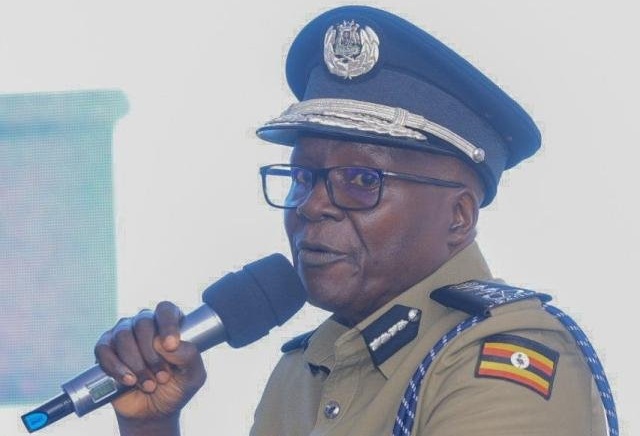
Inspector General of Police Abas Byakagaba unveiled the proposal on Thursday while meeting senior commanders at Police Headquarters in Naguru. The meeting brought together officers responsible for regions, divisions, criminal investigations and crime intelligence.
The proposed position, to be known as Senior Assistant Inspector General of Police, would create an additional leadership level above the current AIGP rank.

Byakagaba said the force needs another level of command but wants to keep the number of officers at the highest level relatively small.
Currently, the force is headed by the Inspector General of Police and his deputy, both presidential appointees rather than substantive police ranks. Assistant Inspector General of Police is the highest substantive rank, held by officers who head directorates.

Below the AIGPs are Senior Commissioners of Police, followed by Commissioners of Police and Assistant Commissioners of Police. The proposed rank would therefore introduce another tier between the AIGPs and the office of the IGP.
The proposal follows a wider institutional review, building on an earlier exercise conducted more than a decade ago.
Byakagaba said the intention is to make the force’s leadership leaner, more accountable and better suited to its size and workload.
Byakagaba outlined plans to reorganise regional policing into five broad zones beginning in 2027.
Kampala Metropolitan, which already operates as a zone, would retain its status, while four additional zones would be created from the rest of the country.
Each zone would be headed by an officer senior to a Regional Police Commander, with authority to mobilise personnel, logistics and funds, as well as make operational decisions.
Byakagaba emphasised what he described as the need for real empowerment of commanders.
He warned that new titles and responsibilities would mean little if officers lacked the resources to perform their duties.
He said commanders, from district police commanders to officers in charge of stations, must be facilitated to travel, respond to incidents and make decisions.
He referred to the deployment of an officer to a distant district, arguing that such an assignment is meaningless without transport and other necessary support.
Byakagaba informed commanders that the force is pursuing a programme to construct multi-storey accommodation for personnel, including proposed 23-storey blocks.
Plans for a dedicated police hospital and a modern forensic laboratory are also part of the infrastructure agenda.
He revealed that the Canine Unit is being strengthened, with ten vehicles already secured and plans to acquire another 40 to support detection and tracking operations across the country.
Byakagaba also announced changes to the way the police report their performance to the public.
The annual crime report, which has traditionally focused largely on statistics relating to murders, road crashes and other offences, will be expanded.
Future reports will also include police activities during the year, such as operations, community engagements and institutional reforms, to give the public a broader picture of the force’s work.
The IGP challenged commanders to move away from a policing approach that waits for crimes to occur before responding. Instead, he urged them to strengthen systems that prevent crime.
He said intelligence gathering, investigations and technology should be directed towards preventing offences.
Effective investigations, he added, also serve as a deterrent by demonstrating that offenders will be held accountable.
He singled out CCTV operators, urging them to move beyond passively monitoring screens and adopt active surveillance by identifying suspicious behaviour and alerting relevant officers early enough to prevent incidents.
Byakagaba’s message to commanders was that the planned restructuring must bring practical changes to policing, rather than simply alter titles and reporting arrangements on paper.