

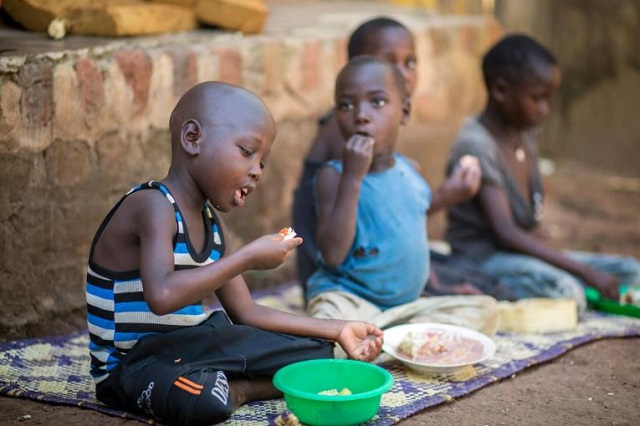
Kampala, Uganda | ENTEBBENEWS.NET | Accessing nutritious meals continues to be a major challenge for Ugandans due to the costs involved. Experts say that the price of a nutritious meal, comprising fruits, vegetables, lean proteins, and whole grains, often surpasses the financial means of a considerable number of households.
Dr Christiane Rudert, UNICEF’s Eastern and Southern AfricaRegional Nutrition Advisor says that despite the importance of maintaining a balanced diet for overall health and well-being, a substantial number of Ugandans struggle to afford meals that meet their nutritional needs.

“A nutritious meal costs not lower than 10,000 Shillings. Many individuals in Uganda are practically unable to afford a healthy diet for improved nutrition. 10,000 Shillings is prohibitive for millions of Ugandans,” Rudert said.
She made these remarks during the ongoing National Nutrition Forum organized by the Office of the Prime Minister with support from UNICEF. The forum serves as a platform for diverse stakeholders, including government ministries and departments involved in the food and nutrition value chain, as well as development partners, to collaborate on addressing nutritional challenges.
The nutritionist pointed out that analysis indicates that many households, especially those in the lowest-spending bracket of 15 to 35 per cent, cannot affordably address gaps in complementary feeding, particularly concerning animal-source protein, iron, and calcium.

“These households likely rely on the cheapest available staple foods and struggle to meet energy and nutrient requirements,” Rudert added.
Agnes Kirabo, the Executive Director of the Food Rights Alliance, noted that several Ugandans no longer eat what they need but rather what they can afford. She adds that while Uganda boasts a rich agricultural landscape and diverse culinary traditions, ensuring access to nutritious food for all remains a formidable challenge.
“Efforts to address this challenge require a multi-faceted approach, encompassing initiatives aimed at improving agricultural productivity, promoting sustainable farming practices, enhancing market accessibility, and providing education on nutrition and healthy eating habits,” she noted.
Kirabo who also doubles as chairperson of Scaling Up Nutrition Civil Society Network (SUNCSN) in Uganda observed a need for policies and programs that prioritize the affordability and availability of nutritious food options, particularly for vulnerable populations such as low-income families, children, and the elderly.
Dr Munir A. Safieldin, UNICEF Representative and Chairperson of Development Partners emphasized that despite commendable advancements in economic growth and poverty alleviation, Uganda continues to grapple with persistent challenges in reducing malnutrition.
“Chronic undernutrition, in particular, persists as a critical issue, with approximately one in four children under the age of five experiencing stunting. Additionally, the quality of diets for children under two years old remains a pressing concern, with only a fraction receiving the recommended nutrition,” Dr Safieldin said.
Prime Minister Robinah Nabbanja highlighted ongoing initiatives, such as the implementation of the Uganda Nutrition Action Plan as evidence of concerted efforts to address the nutritional requirements of all demographic segments, especially the most vulnerable populations.
Nabbanja emphasized the integration of the Nutrition Action Plan with the Parish Development Model, further amplifying the government’s commitment to holistic community development.
“PDM is a transformative approach aimed at enhancing household incomes and overall quality of life for Ugandans. If incomes are enhanced, households will afford balanced diet and boost their nutrition level,” the Prime Minister noted.
*******
URN