

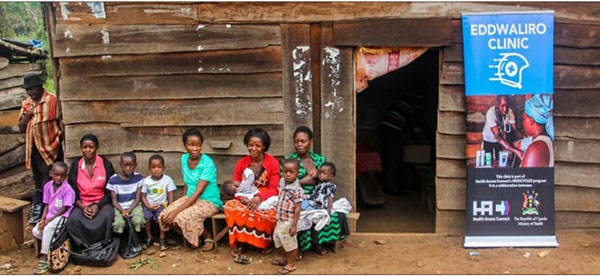
According to the MPI, 27 per cent of Ugandans (Approx.12.2 million) are classified as multidimensionally poor, with stark regional disparities
Kampala, Uganda | JULIUS BUSINGE | Uganda’s progress in reducing income poverty is masking a more complex reality, as new data shows millions of citizens still face significant deprivation in access to basic services, education and living standards.

Officials and statisticians say the country is increasingly redefining poverty beyond earnings, with the Uganda Bureau of Statistics (UBOS) unveiling its latest Multidimensional Poverty Index (MPI).
The index, released in Kampala last month, measures poverty across a broader set of indicators, capturing not just income but access to healthcare, education, housing and essential services such as water and energy.
The country has made notable gains in reducing income poverty, which has fallen to 16.1 per cent in the 2023/24 financial year from 56 per cent in the early 1990s. But policymakers caution that this metric alone no longer reflects lived realities.
“Despite the reduction in income poverty, there remains a challenge due to the nature and prevalence of multidimensional poverty,” said Amos Lugoloobi, the state minister for finance and planning.

12.2million multidimensionally poor
According to the MPI, 27 per cent of Ugandans (Approx.12.2 million) are classified as multidimensionally poor, with stark regional disparities. The north-eastern sub-region of Karamoja is the hardest hit, with 56.9 per cent of its population facing overlapping deprivations, followed by West Nile at 39 per cent and Sebei at 33.5 per cent. By contrast, the capital Kampala records the lowest rate at 8.8 per cent.
The data also points to entrenched inequalities between rural and urban areas. Multidimensional poverty stands at 31.5 per cent in rural communities, significantly higher than in urban centres, and is more prevalent among female- and child-headed households.
Unlike income-based measures, the MPI assesses both the incidence and intensity of poverty. Individuals are deemed poor if they are deprived in at least 40 per cent of weighted indicators spanning education, health, living standards and access to basic services.
These include years of schooling, school attendance, access to health insurance, housing quality, employment, financial inclusion, and access to clean water, sanitation and modern energy sources.
Lawmakers welcome new model
Lawmakers say the findings are already influencing fiscal planning. Geoffrey Ekanya, a member of parliament’s finance committee, said persistent poverty patterns in regions such as Karamoja and West Nile underscore the need for targeted interventions rather than broad national programmes.
Reliable data is increasingly shaping budget priorities, he added, with parliament relying on UBOS statistics to align spending with the country’s development agenda.
Faith Nakut, another legislator, said districts such as Napak continue to face acute deprivation, despite sustained government investment in poverty reduction.
Her comments highlight a growing policy shift: from reducing headline poverty rates to addressing specific, overlapping deprivations that constrain economic participation.
For the government, the MPI is emerging as more than a statistical tool. Officials say it will guide efforts to close gaps in service delivery and improve overall living standards—signalling a broader redefinition of what it means to tackle poverty in Uganda.
Key facts
- Uganda’s multidimensional poverty rate stands at 27 percent
- Income poverty has reduced to 16.1 percent from 56 percent in the early 1990s
- Karamoja has the highest multidimensional poverty at 56.9 percent
- Kampala has the lowest at 8.8 percent
- Rural poverty at 31.5 percent is higher than in urban areas
- Female- and child-headed households are more affected
- A person is considered multidimensionally poor if deprived in at least 40 percent of key indicators