

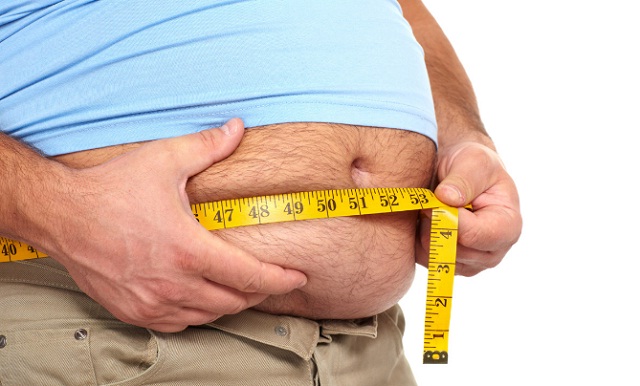
Kampala, Uganda | ENTEBBENEWS.NET | Nuclear Science, which for years has been associated with bombs and power plants can now be used to tackle obesity.
As the world marks obesity day 2024, the International Atomic Energy Agency (IAEA) says it has devised a body composition database that will help devise better health policies to combat growing obesity challenges worldwide.

World Obesity Day internationally commemorated on – 4 March – is a unified day of action that calls for a cohesive, cross-sector response to the obesity crisis.
This year’s campaign theme is ‘Let’s Talk About Obesity And…‘. The theme emphasizes encouraging people to start conversations that address obesity from a cross-cutting perspective. The idea is to look at health, youth, and the world as a whole to find ways to combat obesity together.
Presently, Scientists use Body Mass Index (BMI) to determine whether one is overweight. The body index composition database by IAEA comes in as an alternative to identifying/ classifying obesity levels by looking at one’s body composition Body composition describes what the body is made up of, that is, the components of body weight.

In the simplest model, the body can be divided into fat and fat-free mass. The amount of fat mass and fat-free mass is indicative of current health status as well as being predictive of long-term health conditions, such as non-communicable diseases.
IAEA says learning more about body composition, which refers to the relative amounts of fat and lean tissue that make up the body, can help experts and policymakers make more informed decisions, as body composition is a proven indicator of nutritional health. The world is facing a double burden of malnutrition – undernutrition and obesity coexist, contributing to non-communicable diseases.
According to the World Health Organization (WHO), worldwide obesity has nearly tripled since 1975. Around 800 million adults worldwide are living with obesity and the number of children living with obesity is expected to reach 250 million by 2030.
The 2022 Global Nutrition Report reported that there is currently a global nutrition crisis, stating “poor diets and malnutrition in all its forms are among the greatest societal challenges of our time, impacting our health, our economies, and our environment”.
Obesity is now rising the fastest in lower- and middle-income countries, with around 70 per cent of globally overweight or obese people living in these countries.
People living with obesity are at increased risk of other chronic diseases such as diabetes and cardiovascular disease and are more likely to develop 13 types of cancer.
“To effectively prevent and manage obesity, interventions need to be based on accurate, informative and relevant data” said Alexia Alford, a Nutrition Specialist at the IAEA.
“The new database will bring together body composition data collected using nuclear techniques from across all global regions and from all stages of life. This data will contribute to understanding the complex condition of obesity and provide evidence to support the design of nutrition interventions for the prevention and management of obesity.”
The new IAEA BC database is being populated by countries’ data obtained using the non-invasive stable isotope technique of deuterium dilution. This will enable researchers to examine obesity regarding body composition data rather than data based only on body proportions, such as weight and height. T
The IAEA’s new database is a growing global collection of studies, currently representing 13 countries from Latin America, Asia and Africa with data points from around 2600 study participants.
****
URN