

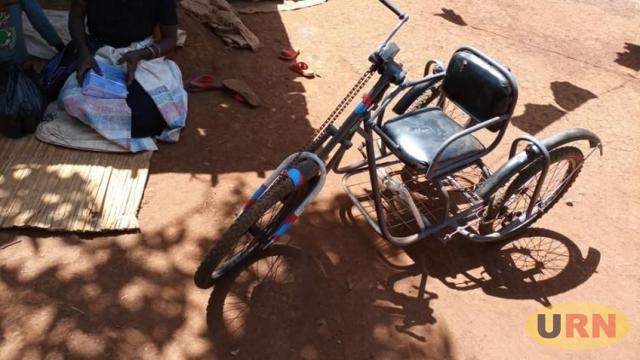
Kampala, Uganda | ENTEBBENEWS.NET | Players in the health sector have called for greater regulation of assistive technologies in the country. There are fears that some of the devices being donated in the country are wrongly prescribed or do not meet the standards.
Assistive technologies can benefit a wide range of people, including those with disabilities; those with age-related frailties; those affected by non-communicable diseases; and those requiring rehabilitation.
The call for regulation of these devices was sounded by rehabilitation expert, Sam Tukei Ojulo. Ojulo, the Country Director of the USAID-funded program known as ReLAB-HS. ReLAB-HS is a five-year program helping the Ministry of Health to adopt and strengthen rehabilitative care.

Rehabilitative care services and devices if properly diagnosed can help formerly sick or injured persons to get back, or improve skills and functioning for daily living.
Vital as they may be, Sam Tukei Ojulo and others have found that in Uganda, a lot of assistive devices including wheelchairs come in but their standards are not regulated. He says everyone seems to be offering rehabilitative services without any form of regulation or right prescription by qualified professionals.

He revealed that the situation has further been worsened by donations of such devices which often come in without doing the necessary checks. Some of the faulty devices were mostly sent as donations to Northern Uganda following the end of the close to two decades of war.
Little funding for the Orthopedic sections at the district hospitals tends to force those who have suffered from road accidents to seek services from less qualified persons who tend to recommend the wrong devices.
Ojulo said the fact that the government does not prioritize having such services in place now will only create more pressure on the health system when numbers keep piling. Other assistive devices like eyeglasses and hearing aids have been sent in as donations. Complications resulting from road crashes and diseases diabetes are likely to see a surge in the demand for assistive devices.
Dr. Samuel Opio, the Deputy Chairperson of the Health Committee of Parliament said assistive technologies are largely not paid attention to whenever the health sector budget is being appropriated.
He said part of the problem is the fact that there’s no data to paint a picture of how big the burden is. To date he says, there is no dedicated budget lines for assistive devices.
However, when these concerns were put to officials in the Ministry of Health (MOH), they acknowledged the gap but said they are working with limited budgets that cannot allow them to focus on assistive devices.
Expeditious Ahimbisibwe, the Principal Health Economist in the Ministry of Health says they would need about 500 billion allocated to assistive devices but so far, for many patients even at the National Referral facility in Mulago, accessing a properly functional wheelchair is a struggle.Uganda, like most African health systems, gaps in rehabilitative care. Experts have found that product designs are insufficiently informed by users’ and caregivers’ preferences and environments, and the transfer of technologies to low-resource settings is limited.
It is estimated that one in six Ugandans are receiving or need rehabilitative services but such services are only offered in a few places, largely at a tertiary level.
Rehabilitative care just doesn’t stop at devices. It also requires specialists in that area who in the case of Uganda are still few. It s common for patients to travel from the remote parts of the country to seek services from CoRSU in Wakiso . CoRSU was established in 2009 as a private, non-profit, non-governmental organization in Uganda.
CoRSU’s core mandate is to mitigate the debilitating effects of disabling physical conditions, by ensuring accessibility and availability of quality, preventative, curative, rehabilitative services for people with disability in Uganda and neighboring countries.
*******
URN
The post Government tasked to regulate rehabilitative care devices appeared first on The Independent Uganda:.