

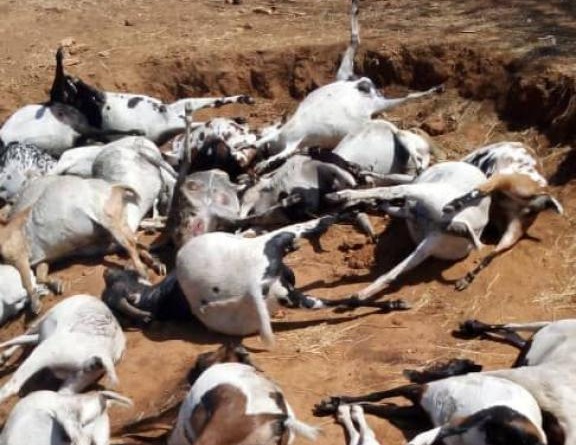
Kampala, Uganda | ENTEBBENEWS.NET | Scientists have expressed concern over the increasing number of districts reporting outbreaks of Peste des Petits Ruminants (PPR) a highly contagious disease that was previously affecting the Karamoja Region.
Joseph Nkamwesiga, a Researcher told URN in an interview that he had embarked on a survey to identify where else the disease also known as goat and sheep plague is circulating after getting reports from farmers pointing to symptoms of the disease.

The symptoms which include diarrhoea, lesions around the mouth, mucus in the nose, teary eyes and unexplained sudden deaths were identified in animals in Central Uganda and South Western Uganda, where the disease is currently circulating including
Nkamwesiga shared these findings at a Conference organized by the International Livestock Research Institute (ILRI) where researchers from countries across Africa, officials in the Ministries of Health and Agriculture and the UN Food and Agriculture Organization shared ideas on investigating infectious diseases such as PPR and Rift Valley Fever in addition to tackling antimicrobial resistance.
While calling for urgent vaccination in the newly identified areas, the researcher said that so far, it’s only the Teso and West Nile regions that have the least risk of infection. In the Karamoja region where vaccination took place, the prevalence of the disease was found to be reducing.

Dr Juliet Ssentumbwe, the Commissioner for Animal Production in the Ministry of Agriculture, Animal Industry and Fisheries acknowledged that their surveillance teams are also finding the same evidence. She worries that this is happening at a time when Uganda is only left with seven years to have eradicated the disease.
The country has committed to a World organization for Animal Health resolution to have eradicated the disease that spreads through infected animals grazing with healthy ones or contact while in transit by 2030. She notes the biggest challenge they face in tackling the disease is that it shares a lot of symptoms with other diseases and farmers are not very familiar with it considering that it hasn’t been common previously.
However, PPR is vaccine-preventable and an animal that has been infected develops immunity. Ssentumbwe says they have previously tried vaccinating in some areas but cannot extend to new areas yet because of funding challenges. She says they only receive two per cent of the money they need to conduct vaccination.
But, according to Kristina Roesel, a Scientist at the International Livestock Research Institute, vaccines are not the only challenge the bigger problem is farmer awareness. She says many times farmers seek vaccines when the animals have developed symptoms and are sick unaware of the fact that vaccines are meant for prevention.
Currently, she says there are two effective vaccines, one requiring refrigeration and another that can remain potent 45 days after being removed from the cold chain. She encourages farmers to seek this vaccination to protect their animals. Even in areas where specific facilities for animal vaccines are not available, The good thing she says is in some districts human health workers have agreed to share fridges with vets for storage.
****
URN
The post Goat and sheep plague threatens Uganda’s disease eradication commitment appeared first on The Independent Uganda:.