

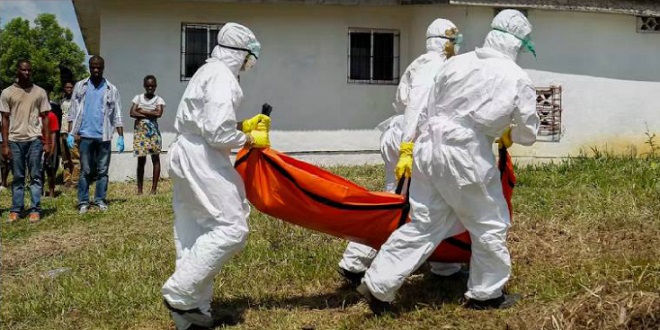
he United States Department of State has raised its travel advisory for Uganda and the Democratic Republic of Congo (DRC) to Level 4—its highest warning level—urging American citizens to avoid all travel to the region due to a rapidly spreading Ebola outbreak.
The designation of “Do Not Travel” coincides with a strict emergency order from the Centers for Disease Control and Prevention (CDC). Effective May 18, 2026, the US has prohibited entry to certain non-US citizens who have traveled through the DRC, South Sudan, or Uganda within the previous 21 days.
The Situation in Kampala and Cross-Border Spread
The outbreak originally intensified in the DRC, where it has already claimed over 200 lives. However, active cross-border transmission has brought the viral hemorrhagic fever into Uganda’s capital.
Uganda’s Current Case Profile:

-
Total Deaths: 1 (an imported case from the DRC).
-
Confirmed Cases: 7 active cases, all concentrated within Kampala.
-
Contacts Under Surveillance: 311 individuals identified for strict follow-up.
Transmission Breakdown of Recent Ugandan Cases:
-
The Vehicle Link: A Ugandan driver who transported the initial index case.
-
The Medical Liaison: A Congolese health worker operating as a medical coordinator for Congolese nationals in Uganda.
-
The Seeker: A Congolese woman who crossed into Uganda specifically to seek advanced medical treatment.
-
The Caregivers: Two Ugandan health workers who treated an active case at a private medical facility.
WHO Warns of Extreme Contact Tracing Challenges
The World Health Organization (WHO) has raised red flags over the geographic spread and ongoing cross-border transmission of the virus. In the DRC, over 2,000 contacts have been listed, but tracking them down has proven nearly impossible.

“Contact follow-up remains a major challenge, with only 19.3% of contacts reportedly seen within the previous 24 hours as of 23 May 2026. Constraints include insecurity, movement restrictions, highly mobile populations linked to mining communities, and difficulties tracing contacts across dispersed populations,” the WHO stated.
Furthermore, health workers in the DRC’s Ituri Province are facing community resistance, misinformation, and direct security incidents at health facilities in the Mongbwalu and Rwampara health zones, severely disrupting outbreak control protocols.
Uganda Imposes Lockdowns and Border Closures
In a swift response to the seven confirmed cases in the capital, the Government of Uganda has rolled out aggressive containment measures to halt any further local transmission:
-
Border Shutdown: Complete closure of the land border with the Democratic Republic of Congo.
-
Entertainment Ban: All music concerts and major entertainment events in Kampala have been banned indefinitely.
-
Gathering Restrictions: Public assemblies have been tightly restricted across all high-risk districts.
-
Strict Event Protocols: Any permitted public functions must comply with stringent, newly issued Ministry of Health sanitization guidelines.
Health authorities are urging the public in Kampala to remain highly vigilant, avoid direct contact with individuals showing symptoms—such as sudden fever, intense weakness, muscle pain, and bleeding—and immediately report suspected cases to the nearest medical center.