

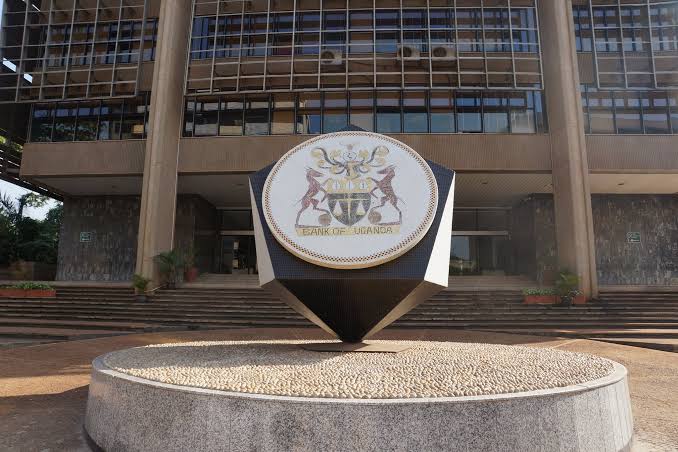
The Coronavirus pandemic induced borrowing has seen Uganda’s public debt raise 3.1% to Shs 73.78 trillion compared to June 2021, says the Bank of Uganda in its latest report on the status of the economy.
The report released late last month says the increase in debt between June and October 2021 was mainly due to Shs 1.67trillion increase in domestic debt.
“The external debt exposure amounted to Shs45.3 trillion (US$ 12.7billion) as of the end of October 2021, an increase of 2.7% compared to June mainly on account of increased debt from multilateral creditors and private banks,” the report states.
The country’s total external debt exposure (outstanding stock of disbursed debt and committed but undisbursed debt) accounted for 62 percent of the total public debt in October. However, the committed but undisbursed external debt stood at Shs15.6trillion (US$4.4billion) as of end-October.

The Debt Sustainability Analysis (DSA) indicates that external debt burden and public debt indicators remain moderate. This is owed to the fact that although the FY2020/21 fiscal deficit widened to 9.1% of Gross Domestic Product (GDP), bringing public debt to 48.3% of GDP from 41.7% in FY2019/2020, and closer to the 50 percent of GDP target, the fiscal target for FY2021/22 reflects post-Covid-19 consolidation, with a fiscal deficit to GDP of 6.4 percent.

However, the debt service to tax revenue ratio gradually increased to 27.1% in October 2021, up from 24.4 percent in October 2020.
Current account to deteriorate
The country’s current account deficit is likely to deteriorate as the goods and services balances worsen in the short term. The trade deficit is expected to widen, as import growth is anticipated in response to the opening-up of the economy.
However, increased external demand combined with the continued strong performance of coffee exports is expected to partially improve the trade deficit.
The report further states that deterioration in the services deficit may persist, as recovery in the tourism sector remains protracted, as travelers remain cautious of emerging strains of the coronavirus.
“In addition, increased transport service expenditure linked to import growth is likely to further contribute to the widening services deficit,” the report says adding that the current account balance will likely be supported by increased remittance inflows associated with the festive season.
Subdued FDI inflows
Meanwhile, Foreign Direct Investment inflows are likely to remain subdued, partly due to gradual recovery in domestic economic activities and weak investor sentiments, reflecting slow recovery of global private capital flows to developing countries. This signals that the budget support and project aid disbursements are likely to be the major sources of finance for the current account deficit.
In the medium term, the current account deficit is likely to further deteriorate as petroleum exploration and production activities resume, particularly the construction of the pipeline, resulting in higher import expenditure.
However, the widening deficit will be partially offset by increased travel services receipts in response to developments in the tourism sector. The trajectory of recovery of the tourism sector is contingent on the evolution of the Covid-19 pandemic and the pace of vaccination.
Given the increased vaccination efforts in both source and recipient countries, receipts are anticipated to increase. Private transfers or remittance inflows will likely increase as economic activity picks up in advanced economies. Similarly, NGO inflows are likely to rise as donors provide grants to address the impact of Covid-19.
However, financial account surplus will widen, as developments in the oil sector in preparation for the first production in FY24/25 are expected to lift investment prospects, thereby significantly strengthening FDI.
On the downside, portfolio inflows are likely to decline as interest rates begin to rise in advanced and emerging market economies.
“Project aid and budget support disbursements are likely to remain strong as the government continues implementing transport and energy infrastructure investments,” states the report adding that the private borrowing of financial corporations and other entities is likely to increase as economic activities recovers.