

Kampala, Uganda | PATRICIA AKANKWATSA | MTN Uganda has expanded its investment in digital education to include teacher training and learning resources, as efforts to integrate technology into classrooms increasingly require educators to have the skills to use it effectively.
The company, through the MTN Foundation, has established a Teachers’ Resource Centre in partnership with Burn Radio Ltd under its Bridging the Digital Divide Programme. The centre provides online and offline resources to support lesson preparation, introduce teachers to artificial intelligence tools and help parents support children’s learning at home.

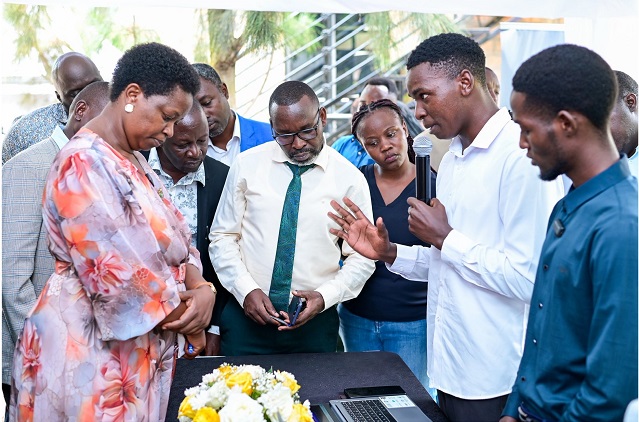
The initiative was unveiled on October 22 and coincided with the graduation of 102 teachers who completed the International Certification of Digital Literacy (ICDL) ICT for Education programme.
Bryan Mbasa, senior manager at the MTN Foundation, said the initiative was part of the company’s Ambition 2030 strategy, which focuses on digital solutions, connectivity, financial technology and digital infrastructure.
“Connectivity is an important starting point, but its real value lies in what people can do with it. By supporting teachers with digital skills and accessible learning resources, we want to strengthen teaching and expand opportunities for learners,” Mbasa said.

The resource centre is also intended to help parents understand Uganda’s curriculum and support learning at home, including in communities where internet access is limited.
Judith Akurut, commissioner for inspection and compliance in the Ministry of Education and Sports’ Education Standards and Quality Assurance Department, said private sector partnerships could support government efforts to integrate technology into teaching.
“Digital learning is most effective when teachers have the skills and resources to use technology in ways that improve classroom delivery and learner outcomes. Initiatives such as the MTN Teachers’ Resource Centre will help equip teachers with practical tools to support our new curriculum implementation and respond to the changing needs of learners,” she said.
The programme builds on the MTN Foundation’s Digital Access Programme, which supports access to computers and ICT facilities in schools and other learning institutions.
Since 2012, the foundation has supported more than 100 ICT and education interventions, including through partnerships with Kampala Capital City Authority.
MTN has also supported schools in underserved communities to introduce learners to robotics, coding and artificial intelligence.
In 2025, eight schools supported through its partnership with Burn Radio participated in the World Robot Olympiad Uganda National Championship for the first time.
Joseph Tibakanya, a senior curriculum specialist in charge of ICT at the National Curriculum Development Centre, said digital training could improve classroom delivery, particularly if teachers in underserved schools also benefited.
Beyond teachers, MTN Uganda is encouraging young people to enrol in its MTN Skilling Academy to acquire skills intended to improve their employment prospects and participation in the digital economy.
The initiatives align with Uganda’s Fourth National Development Plan, which prioritises productivity, employment and socio-economic transformation, as well as the United Nations Sustainable Development Goals on quality education, decent work, and industry and innovation.
However, the impact of digital education programmes will depend not only on access to devices and training but also on whether schools have the infrastructure, resources and ongoing support needed to apply digital skills in everyday teaching.
MTN Uganda said its education investments were intended to help teachers, parents and learners turn access to technology into practical skills and improved learning outcomes.
The post MTN Uganda expands digital training for teachers appeared first on 1:.