

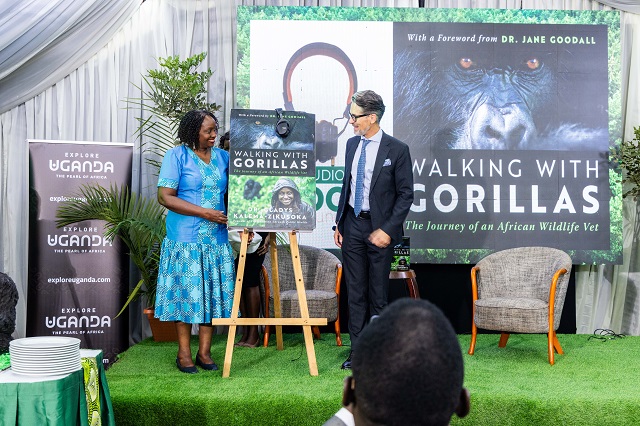
From gorilla trails to global audiences, Dr Gladys Kalema Zikusoka’s voice brings Uganda’s conservation story closer to the world
Kampala, Uganda | JULIUS BUSINGE | For an audience united by a shared interest in biodiversity, wildlife and the environment, the launch of the audiobook version of “Walking with Gorillas” offered more than an opportunity to listen to a familiar conservation story.
It was a reminder of how one woman’s journey from an animal-loving student to Uganda’s first wildlife veterinarian has become intertwined with the survival of mountain gorillas, the wellbeing of communities and the future of tourism.

The audiobook, narrated by its author, Dr Gladys Kalema-Zikusoka, was launched on Thursday, August 20, 2026, at Sheraton Kampala Hotel, three years after the hardcopy version of the memoir was officially launched in Uganda at Kampala Serena Hotel on July 5, 2023, with former US Ambassador Natalie Brown as guest of honour.
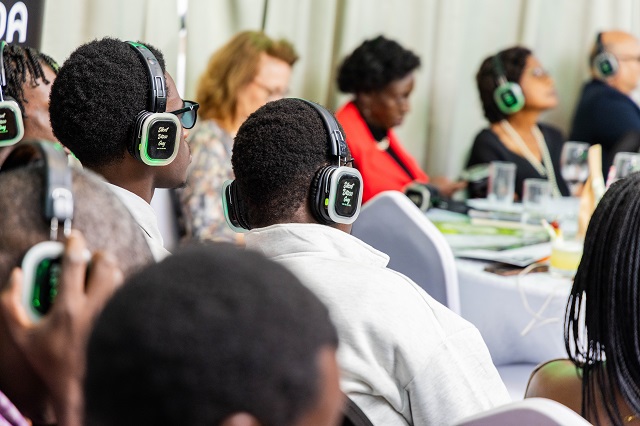
The event brought together conservationists, tourism and hospitality players, diplomats and others passionate about biodiversity and environmental protection.
For Dr Kalema-Zikusoka, however, giving the book a new voice was also about making her story accessible to a wider audience.

“When my book came out in America, they thought I’d be too busy to do it, but I said, no, I really want to do it myself,” she said.
The audiobook was produced with Stone Age Pictures and is now narrated in her own voice, allowing listeners to experience the memoir through the voice of the woman whose conservation journey it documents.
A life in conservation
Walking with Gorillas traces Dr Kalema-Zikusoka’s journey from her childhood fascination with animals and her days at Kibuli Secondary School, where she established a wildlife club, to her decision to pursue veterinary medicine.
She later convinced Dr Droma to hire her as Uganda Wildlife Authority’s first wildlife veterinarian, entering a conservation field in which, she recalled, handling and treating wild animals was not common practice.
“When I was the first wildlife vet in UWA, no one used to touch animals, but now everybody is treating them, moving them,” she said.
For her, that transformation represents more than professional progress. It illustrates how conservation practices and attitudes towards animal welfare have changed over time.
She pointed to UWA’s recent translocation of kob to a new area as an example of how wildlife management has evolved. But protecting gorillas, she said, required looking beyond the animals themselves.
“My early thinking was about protecting the gorillas and preventing them from getting compromised. You can’t protect the gorillas unless you engage the communities around them,” she said.
That realisation became the foundation for her work in Conservation Through Public Health (CTPH), which she founded in 2003.
People and gorillas
At the centre of Dr Kalema-Zikusoka’s conservation philosophy is the belief that the wellbeing of people and wildlife cannot be separated.
Her experience working around Bwindi Impenetrable National Park showed her that poor health, sanitation and livelihoods among communities living alongside gorillas could ultimately threaten the animals.
“You cannot keep the wildlife going without improving the health and wellbeing of their neighbours,” she said.
Through CTPH, this thinking has developed into a One Health approach that links human health, wildlife conservation and ecosystem protection. The organisation has worked with thousands of households around Bwindi on health, sanitation and family planning, while also supporting livelihoods and conservation-linked enterprises.
Her work has also helped challenge the historically male-dominated nature of conservation, while placing women and young people at the centre of the sector’s future.
Dr Kalema-Zikusoka said she is encouraged that Ugandans are increasingly identifying with the gorilla and understanding its importance to the country.
She noted that the gorilla’s image appears on Uganda’s Shs50,000 note, while communities living around conservation areas increasingly understand the value of protecting the animals. That means the next generation will be friendly to the conservation of nature,” she said.
She also linked conservation to broader issues including climate change and responsible population planning.
Tourism through storytelling
The audiobook also comes at a time when Uganda is seeking to strengthen the connection between conservation and tourism.
Dr Kalema-Zikusoka said the hardcopy of “Walking with Gorillas” had already influenced some potential visitors to choose Uganda because of what they read about its gorillas.
“A lot of tourists have read my book even before they come to Uganda,” she said.
Some, she added, had considered travelling to other countries but became interested in Uganda after reading about its gorillas. “When they read about the gorillas in Uganda, they say, ‘We have to come to Uganda,’” she said.
She expects the audiobook to take that message further by reaching people who may prefer listening to reading.
“I know that through the audiobook, even more tourists will want to come and visit Uganda, see the gorillas and support the local efforts on the ground,” she said.
She also encouraged more Ugandans to write and narrate their own books, arguing that local stories can become powerful tools for promoting the country internationally.
The audiobook is available through major audiobook platforms, including Audible, where it is listed as narrated by Dr Kalema-Zikusoka herself.
Hospitality joins conservation
The launch also saw Sheraton Kampala Hotel unveil Zongo, a wildlife mascot and conservation campaign inspired by Uganda’s mountain gorillas.
Jean-Philippe Bittencourt, General Manager of Sheraton Kampala Hotel, said the initiative reflects the hotel’s belief that its responsibility extends beyond providing accommodation and hospitality services.
“Hospitality is about celebrating lives and other aspects of life. As a hotel, our service goes beyond offering hotel facilities,” Bittencourt said.
He said the partnership was intended to promote tourism, sustainable living and the ecosystems in which the hotel operates.
“We’re proud to partner to promote tourism, sustainable lives and the ecosystem in which we operate,” he said.
Zongo will feature in Sheraton Kampala’s social media platforms, guest experiences and special events, with the hotel also introducing limited-edition collectibles.
A percentage of revenue from the sale of the collectibles will go to CTPH to support mountain gorilla conservation.
Bittencourt said the initiative was designed to keep gorilla conservation in public conversations beyond the launch event.
“This will ensure people talk about gorillas today and in the future,” he said.
The campaign forms part of Marriott International’s Serve 360 platform, which encourages social and environmental impact across its properties.
A wider conservation mission
The launch also attracted Jan Sadek, Ambassador of the European Union to Uganda, who described the audiobook as an important moment for conservation.
For Sadek, the strength of the memoir lies in its personal nature and its ability to connect conservation with the relationship between people, wildlife and the environment.
“The audiobook is about conservation, and an audiobook is a great moment. When a book is as personal as this one, it adds something tangible to conservation and the ecosystem,” Sadek said.
He stressed that protecting gorillas cannot be separated from protecting the communities that live alongside them.
“People and gorillas are inseparable, so you have to care for both,” he said.
Sadek also reiterated the EU’s interest in supporting Uganda’s biodiversity and environmental efforts, pointing to the EU’s €40 million (about Shs167 billion) forestry programme launched in Uganda to address the root causes of deforestation while promoting reforestation and sustainable economic development. The programme includes initiatives covering sustainable forestry value chains, forest restoration, forest governance and community livelihoods.
A timely recognition
The audiobook launch comes at a significant point in Dr Kalema-Zikusoka’s career. She was named a 2026 CNN Hero for her pioneering conservation work, which links wildlife protection with the health and livelihoods of communities living alongside mountain gorillas.
CNN highlighted her work in helping communities and gorillas thrive together through an integrated health and conservation approach.
That philosophy is at the heart of “Walking with Gorillas”, which recounts her personal journey, including her childhood, veterinary training, experiences as Uganda’s first wildlife veterinarian and the founding of CTPH.
The memoir also chronicles the challenges she faced as a woman entering a male- dominated conservation profession and her efforts to build a model in which wildlife and communities can coexist.
With the audiobook, that journey has acquired a new dimension: Dr Kalema-Zikusoka is no longer simply telling Uganda’s conservation story on the page. She is speaking it directly to a new generation of listeners.
And as Uganda seeks to turn its extraordinary biodiversity into sustainable tourism while protecting the ecosystems on which communities depend, her message remains simple: the future of the gorillas is inseparable from the future of the people who live beside them.
The post Walking with Gorillas finds a new voice in audiobook launch appeared first on 1:.