

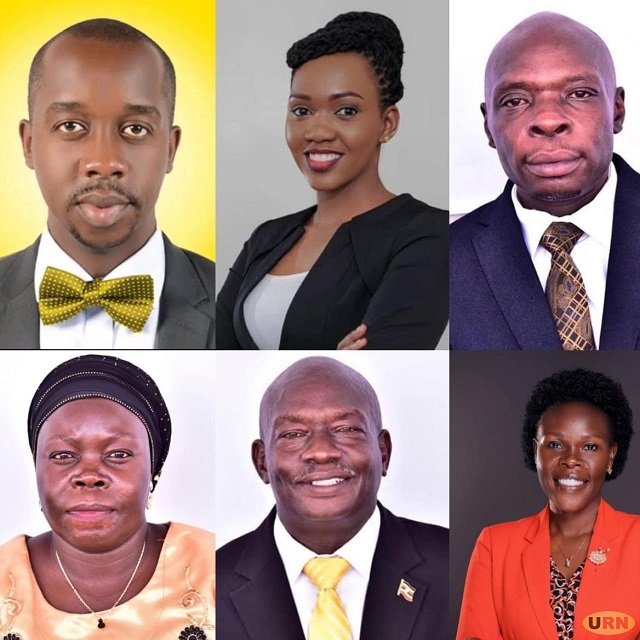
Lira, Uganda | URN | Leaders and residents in West Nile have expressed disappointment over the newly released Cabinet list from State House, saying the region has once again been allocated only state minister positions, which they argue limits its influence in national decision-making and development planning.
The Chief Executive Officer of the West Nile Development Association (WENDA), Moses Akuma Odims, said the region’s leadership and people remain dissatisfied, noting that state minister positions may not provide sufficient leverage to effectively advance the region’s development priorities.
He, however, called for unity among West Nile leaders to strengthen their collective voice in pushing the regional development agenda.

Meanwhile, the Prime Minister of Aringa Chiefdom, Fadhil Lemeriga, said that although Aringa Chiefdom has secured two state minister positions, the wider West Nile region remains disappointed with its overall representation.
He argued that the President should consider awarding additional appointments to West Nile in recognition of the strong support the region continues to give him during elections.

However, former Deputy RCC of Arua and author of Voice of West Nile, Dickson Adomati, struck a more optimistic tone, saying the region remains hopeful that it will be given a full Cabinet minister in the near future following its consistent support for the ruling NRM government.
In the latest Cabinet list released yesterday, President Yoweri Kaguta Museveni assigned six state minister positions to West Nile. The reshuffle also saw the dropping of several senior figures from the region, including General Moses Ali, the longest-serving Second Deputy Prime Minister; Mario Obiga Kania, former State Minister for Housing and Urban Development; Dr Moriku Kaducu, former State Minister for Primary Education; and Evelyn Anite, outgoing State Minister for Investment and Privatisation.
Phiona Nyamutoro from Nebbi District was named State Minister for Energy and Mineral Development (Minerals), Dr Charles Ayume of Koboko Municipality was appointed State Minister for Health (Primary Health Care), and Alioni York Odria of Aringa South was nominated State Minister for ICT and National Guidance.
Others include Hudah Oleru from Yumbe, who retained her position as State Minister for Defence and Veteran Affairs; Tom Aleru Aza of Moyo, appointed State Minister for Trade (Cooperatives); and Musa Siraj Ali, son of Gen. Moses Ali, appointed State Minister for Works and Transport.
However, reactions across the region have remained mixed, with many residents expressing frustration over what they describe as a continued pattern of assigning West Nile only state minister positions, arguing that it leaves the region “under the political table.”
According to a regional breakdown of the appointments, Western Uganda has 27 ministers, Buganda has 18, Eastern Uganda has 15, while Northern Uganda, comprising Acholi, Lango, Karamoja, and West Nile, has 16 ministerial positions. Overall, the announcement has sparked renewed debate about regional balance and equitable representation in national leadership appointments.