

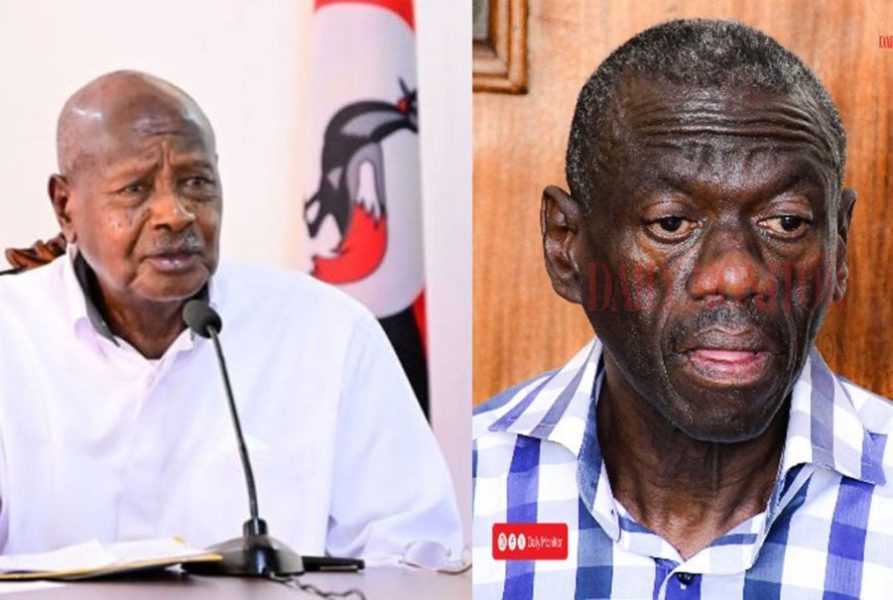
President Museveni has weighed in on the arrest and remand of opposition leader Dr. Kizza Besigye, emphasizing that the key issue at hand is a speedy trial rather than calls for reconciliation or forgiveness.
In a statement on Tuesday directed at Ugandans, particularly his supporters, Museveni stressed that accountability must take precedence over political sentiment.
“I have seen the concern by some Ugandans regarding the remanding of Dr. Besigye for the very serious offences he is alleged to have been planning,” Museveni stated.
“If you want a stable country, the more correct question should be: ‘Naye Dr. Besigye bamukwatira ki? Why was Dr. Besigye arrested?’ The answer to that is a quick trial so that facts come out.”

The President’s remarks suggest that justice should be served without delay, dismissing any notion that Besigye’s situation should be handled through political reconciliation.

Museveni’s remarks come at a tense moment, as Besigye, who is jailed at Luzira Maximum Security Prison on charges of illegal possession of firearms and treachery, appeared frail and weak in court on Friday while facing additional charges of inciting violence.
On Sunday, Besigye’s family raised alarm over his deteriorating health, revealing that prison authorities had suddenly requested his personal doctor to visit him—a shift from their previous stance, where such access was denied.
Edith Byanyima, speaking on behalf of the family, expressed grave concerns that this unexpected request signals a severe decline in Besigye’s condition. She made it clear that Museveni would be held directly accountable for any harm that befalls Besigye.
Several activists have been arrested for protesting against Besigye’s detention.
Accountability
In his statement today, Museveni underscored Uganda’s long-standing doctrine of accountability, dating back to the 1960s, arguing that those who commit serious offences must be held responsible.
Museveni contrasted the current stability of Uganda with the past eras of violence, referencing historical figures such as Janani Luwum, Benedicto Kiwanuka, and Edward Mutesa, who suffered under previous regimes.
“We are now able to remember [them]… moving through a peaceful Uganda and travelling on good tarmac roads because the freedom fighters sacrificed themselves and defeated Idi Amin and all the other killers,” he noted.
While reiterating that his government is not driven by vengeance, the President made it clear that those who pose a danger to national security must be dealt with decisively.
“We are not for vengeance, but the danger of the killers must be removed,” Museveni said, implying that Besigye’s case should be resolved through due legal process rather than political compromise.
The arrest of Dr. Besigye has sparked debate among Ugandans, with his supporters viewing it as politically motivated while government officials insist it is a matter of national security.
“On the issue of sickness, there is, first of all, a government hospital in the Prison. Besides, Dr. Besigye’s personal doctors have been visiting him and even taking him to private clinics. If there was need for any additional medical care, the Gov’t would be advised,” said Museveni.
“However, in this case, Dr. Besigye, was on hunger strike. That is part of the cause for his weakness that we could see in the pictures that were in the Newspapers. Is that not unprincipled blackmail? How can you be accused of serious crimes and, then, your response is hunger strike to generate sympathy for getting bail, etc.? Why don’t you demand a quick trial? The military court was ready for the trial. Let us wait for the civilian court.”
Museveni’s latest comments indicate that the state is prepared to proceed with the legal process, leaving little room for negotiations outside the courtroom.
The opposition leader, a long-time critic of Museveni’s administration, has yet to respond to the President’s remarks.
His legal team has called for his release, arguing that the charges against him are unfounded.
Besigye and his political associate, Hajj Obeid Lutale, were sent to prison by the General Court Martial on security related charges.
The Supreme Court ruling on January 31 declared the trial of civilians in military courts illegal.