

UN agency report warns of global early education funding gap, evidence from Uganda reveals deep inequalities in access
SPECIAL REPORT | RONALD MUSOKE | The promise of education for every child is increasingly being undermined before many children even step into a primary school classroom. Across the world, millions are missing out on the early learning opportunities that experts say are essential for school readiness, lifelong development and breaking the cycle of poverty.

On Nov. 20, as the world marked World Children’s Day, the United Nations Educational, Scientific and Cultural Organization (UNESCO) released a new global report, developed jointly with UNICEF and the Organisation for Economic Co-operation and Development (OECD), warning that progress in early childhood care and education is stagnating, while financing gaps and persistent inequalities continue to deny young children a fair start.
The figures are sobering. Only 59% or close to six in 10 children entering primary school worldwide have received at least one year of pre-primary education, a proportion that has barely changed since 2015. In sub-Saharan Africa, participation one year before the official primary school entry age remains close to 50%.
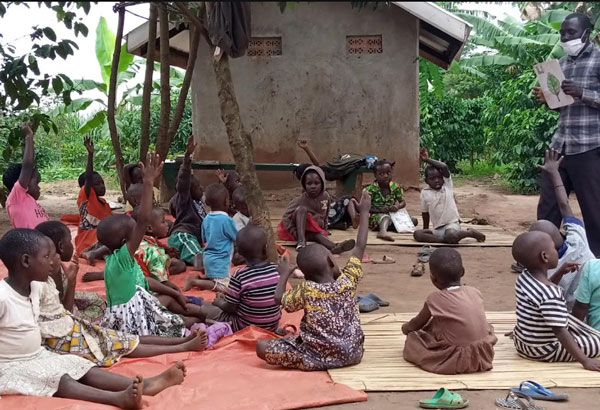
For Uganda, where access to early childhood education (ECE) is already characterised by significant regional and socio-economic inequalities, the warning carries particular weight. The country’s challenge is not simply getting more children into school; it is ensuring that children receive quality learning during the years when the foundations of their future educational journeys are being established.
The UNESCO report estimates that achieving at least one year of pre-primary education for every child by 2030 will require more than US$35 billion in additional annual global investment. Low- and lower-middle-income countries will need an average of US$69 billion annually between 2027 and 2030 to meet their targets while maintaining minimum quality standards. Public financing is projected to cover only about half of these requirements.

UNESCO Director-General Khaled El-Enany says the consequences of neglecting the earliest years extend well beyond the classroom.
“The first years of a child’s life are crucial, yet early childhood care and education remain severely underfunded globally. This lack of investment undermines children’s development and learning, deepens inequalities, and weakens economies,” Khaled said.
He calls on countries to establish sustainable, equitable and coordinated financing systems that put the youngest and most disadvantaged children at the centre. The economic argument is equally compelling. According to the report, the cost of inaction averages 3% of gross domestic product globally and can reach 7% in low-income countries.
On the other hand, every US dollar invested in closing childcare policy gaps could generate an estimated US$3.76 in additional global GDP by 2035. But beyond the economic calculations are children whose opportunities are being determined by circumstances they have little control over.
Uganda’s uneven start
A November 2023 Uwezo-Uganda policy brief provides a detailed picture of the country’s early learning landscape. Drawing on the 2021 Uwezo household survey, which covered 14,553 children assessed in English reading and numeracy, the study found that fewer than half of children aged three to five reported being enrolled in early childhood education. Specifically, 47% reported being enrolled in ECE, while 38% were not enrolled in any school at all. Among children aged three to 14, more than one in three had never attended ECE.
Even for those who had participated, the duration of exposure was inadequate. Among children who had attended ECE for at least a year, only half had done so for the officially mandated three years. The average period of attendance across the surveyed population was just 1.5 years. These figures point to a double challenge: many children never access early learning, while others who manage to enrol do not remain in the system long enough.
The brief also cites World Bank Development Indicators showing that Uganda’s gross pre-primary enrolment rate stood at 14% in 2017, the latest figure available in that dataset when the survey was done. This was considerably below the reported regional and global averages of 28 and 60% respectively.
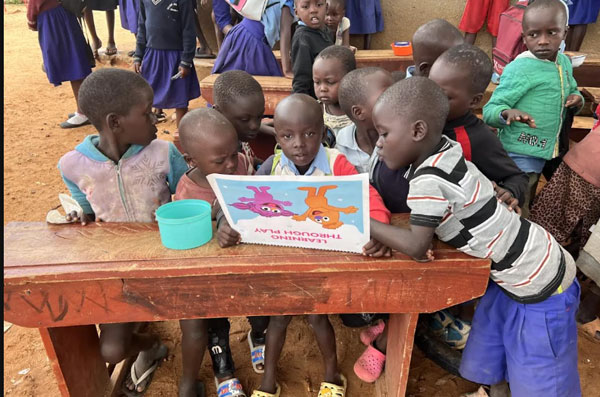
Although the Uwezo survey’s self-reported figures are higher than the official gross enrolment statistic, the researchers caution that the two measures are not directly interchangeable. Nevertheless, both point to a serious access deficit.
Geography makes the problem even more pronounced. Children aged 3-14 in Uganda’s central region are nearly two and a half times more likely to have attended ECE than their counterparts in the northern region. In the sampled central region districts, more than three-quarters of children had enrolled. In four of the six sampled northern region districts, fewer than one in three had done so.
The differences are not explained by household income alone. Uwezo found a 20-percentage-point gap in ECE participation between children from the poorest and richest 20% of households. Children from wealthier households also spent an average of seven months longer in ECE.
However, the regional differences were even more striking. The poorest 20% of households in the central region had an ECE attendance rate more than two and a half times that of the richest 20% in the northern region. This suggests that the availability of early childhood education services, and not simply the ability of families to pay, is a major determinant of participation. For policymakers, the implication is that expanding access requires geographically targeted investment, particularly in underserved communities.
The learning dividend
The case for investing in early childhood education is not based on enrolment figures alone. Uwezo’s analysis offers evidence that attending ECE is associated with substantially better learning outcomes among Ugandan children. Children who had attended ECE were 10 percentage points more likely to read at least words in English and reach at least the subtraction level in numeracy than peers who had not attended.
The researchers adjusted their analysis to account for differences in socio-economic background. Their comparison suggests that children who attended ECE were about 1.4 years, or 17 months, further ahead in their learning trajectory than children of similar age and socioeconomic circumstances who had not attended. Put differently, an eight-year-old who had attended ECE demonstrated learning outcomes more comparable to those of a nine- to 10-year-old with a similar background who had not attended.
Yet the study also raises an important concern about the quality of early learning. Children who attended ECE had been enrolled in education for 2.4 years longer than those who had not attended ECE, but their learning advantage was equivalent to only 1.4 years.
The researchers argue that this suggests considerable room to improve the quality of early childhood education in Uganda. Expanding enrolment without investing in teaching, learning materials, facilities and appropriate curricula may not deliver the expected benefits.
Uwezo’s projections illustrate what could be achieved if access and quality improved together. If every region attained the central region’s ECE participation rate of 89%, the proportion of children aged three to 14 able to read at least a word in English and reach the subtraction level in mathematics could rise from 25% to about 30%.
If the learning benefits associated with attending ECE were doubled through improvements in quality, the proportion could rise to 35%. These are projections rather than observed outcomes, and the researchers caution that expanding early learning alone would not resolve Uganda’s wider learning crisis. But they demonstrate the potential contribution of better access and quality.
A commitment waiting to be fulfilled
The challenge of early childhood education is not new, and neither are the international commitments to address it. In November 2022, governments and other stakeholders gathered in Tashkent, Uzbekistan, for the World Conference on Early Childhood Care and Education, adopting the Tashkent Declaration and Commitments to Action.
The declaration reaffirmed every young child’s right to quality early childhood care and education from birth to eight years. It also recognised that early childhood education must extend beyond conventional classroom learning to include health, nutrition, safety, protection, responsive caregiving and play.
It called on governments to improve the quality of curricula, strengthen teacher preparation, ensure inclusive services for disadvantaged children and increase public investment. One particularly significant commitment was the call for at least 10% of education expenditure to be allocated to pre-primary education, alongside the progressive provision of at least one year of free and compulsory quality pre-primary education for every child.
The declaration also emphasised the need for coordinated government action, recognising that early childhood development cannot be addressed by education ministries alone. Health, nutrition, social protection and other services must work together.
For Uganda, this is an important consideration. Early learning is connected to children’s broader living conditions, including access to nutritious food, safe water, sanitation and healthcare. Uganda’s education system caters for a formal pre-primary provision, which is predominantly private and urban-based, while community ECD centres receive limited state support. As a result, there is a shortage of basic facilities and the reliance on untrained volunteers in some community centres.
The country’s Integrated Early Childhood Development Policy, launched in 2016, provides a framework for supporting children from conception to eight years through health, nutrition, care, stimulation and protection. The challenge is ensuring that these commitments translate into adequately financed and accessible services.
The price of neglect
The global report also highlights a major workforce challenge. The world needs about six million additional pre-primary educators in the next four years (2030), while only 57% of pre-primary teachers in low-income countries meet minimum training requirements.
Experts say early childhood education is not simply about providing children with shelters or structures to stay while their parents work. It requires qualified educators who understand how young children develop, learn, communicate and interact with their surroundings.
The Tashkent Declaration calls for improved training, professional recognition, decent working conditions and better remuneration for early childhood education personnel. It also urges governments to strengthen regulation of private providers, an important issue in countries where much of the provision is outside the public sector.
UNESCO’s Goodwill Ambassador Pharrell Williams captures the wider question of opportunity, noting that, “Ambition and potential are everywhere, but opportunity isn’t always equally shared.” He adds: “When we invest in young children, we invest in all of our futures.”
For Uganda, that investment must begin with recognition that children in underserved districts deserve the same opportunity to develop foundational skills as those in better-served communities. Uwezo’s evidence suggests that girls are only marginally more likely than boys to have attended ECE, reinforcing the finding that geography and household wealth are more significant determinants of access than gender.
The response, therefore, needs to go beyond general promises of expanding pre-school provision. It must identify where services are missing, direct resources towards the most disadvantaged communities, improve teacher preparation and ensure that the quality of learning is not sacrificed in the rush to increase enrolment.
It also requires reliable data to track how many children are enrolled, how long they remain in early learning programmes and what they actually gain from the experience. The joint report’s foreword by UNESCO Assistant Director-General for Education, Stefania Giannini, and UNICEF Deputy Executive Director for Programmes, Omar Abdi, describes early childhood care and education as “the most transformative investment a country can make to give all children a fair start in life and combat inequalities early on.”
That is perhaps the main message for Uganda as it considers the implications of the latest global warning. The country’s education debate has traditionally focused heavily on primary and secondary schooling. But the evidence increasingly suggests that some of the inequalities that become visible in later grades are rooted much earlier, when children are still developing the foundational abilities needed to learn.
World Children’s Day should therefore be more than an occasion for celebrating children and reaffirming their rights. It should be an opportunity to examine whether governments are investing sufficiently in those rights from the very beginning.