

NEWS ANALYSIS | URN | For many children in Uganda, the hardest part of being abused is not the abuse itself but the walk home afterwards, rehearsing how to tell a parent and dreading the shouting that may follow.

That fear, child rights advocates say, is one of the quiet reasons so many cases never reach a police desk, a teacher or a counsellor. As Uganda marks World Children’s Day today, adults are being asked a simple question: When a child finally finds the courage to speak, will anyone hear the whole story before reacting?
In conversations held in the Sebei sub-region ahead of the day, several children said they experience different forms of abuse but often choose silence.
Their greatest fear is not only the abuse itself but the harsh reaction they expect from their parents.
Josheba Chebet, a 15-year-old Primary Seven candidate, explained that many children remain quiet because they fear being shouted at or beaten before they can finish explaining what has happened.

Chebet narrated that sometimes when something bad happens to them, they want to tell their mother or father but are afraid. Some parents, she noted, start shouting or beating them before even hearing the full story, and that is why many keep quiet.
Rebecca Chelimo, a Primary Five pupil, shared a similar experience. She said parents are sometimes very harsh, and when children try to speak, the parents do not want to hear. Chelimo added that this is why some children never say what is hurting them.
The children’s concerns come as Uganda marks World Children’s Day under the theme “Children’s Voices for Safer Communities and Stronger Rights.” The national commemorations, supported by UNICEF and other partners, are placing children’s participation at the centre.
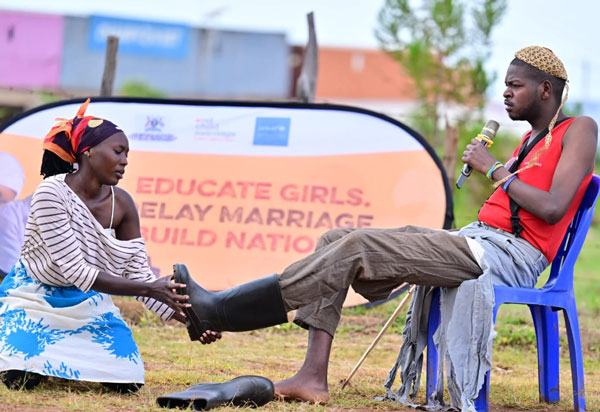
Activities include child-led discussions, a Children’s Parliament, music, drama and sports events involving children from Kapchorwa, Kween and Bukwo districts.
Through sports, children from Kapchorwa, Kween and Bukwo are promoting teamwork, inclusion and child rights while calling for safer communities and protection from harmful practices.
Every child deserves the opportunity to learn, play and thrive.#WorldChildrensDay https://t.co/1f90HQLwbD
— UNICEF Uganda (@UNICEFUganda) November 18, 2026
World Children’s Day is observed every year on 20 November. It marks the adoption of the Declaration of the Rights of the Child by the United Nations General Assembly in 1959 and the Convention on the Rights of the Child in 1989. The day is meant to promote children’s rights and remind society of the need to protect and listen to the young.
In Uganda, violence against children remains a serious concern despite some improvement in reported figures. According to the Uganda Police Force’s 2025 Annual Crime Report, 10,492 cases of defilement were recorded, down from 12,312 the previous year. Of these, 7,019 were classified as simple defilement while 3,473 were aggravated. Overall child-related offences also declined to 8,064 cases in 2025 from 9,408 in 2024. Yet advocates stress that many cases still go unreported because children fear speaking up at home, meaning the real scale of abuse is likely higher.
Beyond sexual violence, other forms of child abuse continue to affect large numbers of children.
The 2024 National Population and Housing Census found that 610,790 children aged 10 to 17, or 6.7 percent, were either currently married or had ever been married. Nationally, about 34 percent of young women aged 20 to 24 were married before the age of 18, with an estimated 5.5 million girls and women living in Uganda having been married as children.

In the Sebei sub-region, the rate among children aged 10 to 17 stood at 8.4 percent, higher than the national average. Child labour also remains widespread, with the latest available national labour force survey showing that 6.2 million children aged 5 to 17, about 40 percent of that age group, are engaged in child labour.
Teenage pregnancy is another persistent challenge, with government and partner reports estimating that around 1,000 adolescent girls become pregnant every day and that the national prevalence has hovered around 25 percent for years. These interconnected forms of abuse and exploitation, child rights actors say, often thrive in silence when children are too afraid to speak or when adults fail to listen without first reacting harshly.
Some parents acknowledge the gap. Stella Cherop admitted that many adults focus on providing food, health care and education while neglecting the basic responsibility of listening to their children.
Cherop said many parents are always busy with work and have left parenting, which includes listening to children, to maids, uncles and neighbours. Yet sometimes, she noted, the very people trusted with the children are the ones abusing them.
Twaibu Twalla, a driver and parent, urged fellow parents to deliberately build friendship with their children. He said parents need to make their children their friends and always engage them so that if anything happens, the children will be open and the parents will be the first to know.
Uthman Fadul Chemonges, the deputy speaker of Kapchorwa District and a child rights advocate in the region, noted that when children feel they will not be believed or will face further punishment for disclosing abuse, they suffer in silence. This, he said, makes it harder for families, communities and authorities to protect them.
Chemonges urged parents to treat listening to children as a serious responsibility. He said it means giving them attention, believing them when they report harm, and responding with support rather than anger.

Samuel Ngirio, the speaker of the Sabiny cultural clans leadership, described listening as a critical part of parenting.
He said giving a listening ear to children is one of the most important responsibilities of parents because it builds trust and creates a safe space for the young to open up about their challenges.
Ngirio stressed that when parents listen without first reacting in anger, children gain the confidence to report abuse early, which can help prevent further harm. He, however, also reminded the children of their own duty.
Quoting a Bible verse on honouring parents so that their days may be long, he told them that listening is a two-way process. He said that if children listen to their parents, the parents will in turn be more willing to listen to them.
Dr. Robin Nandy, the UNICEF Representative, emphasised one of the core promises of the Convention on the Rights of the Child, noting that when decisions are made about a child’s life, the child has the right to be heard and taken seriously.
He noted that although their stories may be hard to tell, they were exactly what the leaders needed to hear. He also reminded parents and leaders that child rights are not only a UNICEF or government issue but a basic parental responsibility.