

Kampala, Uganda | COMMENT – URN | Beneficial ownership is a legal, financial, and regulatory concept that is important in preventing financial crime and promoting transparency between companies and the government. In the fight against financial crime, it helps trace and prevent money laundering, terrorist financing, tax evasion, and corruption.
On the transparency front, it ensures that public registries and companies cannot use complex or anonymous corporate structures to conceal the individuals who ultimately control or profit from a business — the beneficial owners. Under the regulations, registered legal entities in Uganda, irrespective of their size or turnover, must maintain an internal register of beneficial owners and disclose this information to the Uganda Registration Services Bureau (URSB).

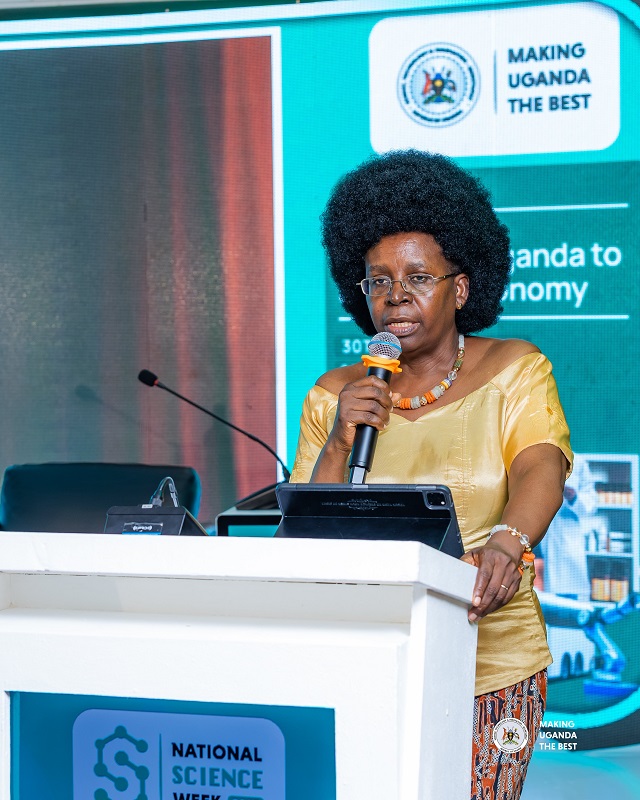
In Uganda, beneficial ownership is provided for under the Companies Act, 2012, and operationalised by the Companies (Beneficial Owners) Regulations, 2023. This week, social media was awash with comments about the ownership of E-Bus Express Kiira Ltd, a subsidiary of the state-owned Kiira Motors Corporation (KMC), following the presentation of documents during a parliamentary probe session showing Monica Musenero as its registered beneficial owner.
Musenero has since responded through her social media accounts, explaining that she was listed as the beneficial owner to safeguard the government’s interests in the company in her capacity as the line minister. She added that the new minister who replaced her is expected to effect the necessary changes once he settles into office. Musenero was the inaugural Minister of Science, Technology and Innovation, the ministry under which Kiira Motors falls, until the May 2026 Cabinet reshuffle.
While some comments suggested the document meant Musenero personally owned E-Bus Express, others questioned KMC’s ownership, in which the government has invested more than 400 billion shillings since 2019. In this case, the government, through the Ministry of Science, Technology and Innovation, owns 96 per cent of the shares in Kiira Motors Corporation and 99 per cent in its subsidiary, E-Bus Express Kiira Ltd. Makerere University owns the other four per cent in Kiira Motors.

In comparison, the remaining one per cent in E-Bus Express is owned by its chairman, Prof. Sandy Stevens Tickodri-Togboa. Under the law, a beneficial owner is a natural person who “ultimately owns or controls a company, or exercises ultimate control over a company’s operations or transactions”. This means that the government or the STI Ministry cannot itself be listed as a beneficial owner because, although it is a legal entity, it is not a natural person.

According to the Advocates Coalition on Development and Environment (ACODE), this definition does not necessarily mean that a beneficial owner must be the majority or absolute shareholder in a company. Where no natural person can be identified through ownership or control, the individual holding the position of senior managing official, such as a managing director or chief executive officer, is designated as the beneficial owner under the law.
Since a beneficial owner must always be a natural person — a living human being — and cannot be a government entity, ministry or the state itself, the rule of “ultimate management” applies. In the case of Kiira Motors and E-Bus Express, as well as several other government-owned companies, including Uganda National Airlines Company Ltd, the relevant sitting minister has been listed as the beneficial owner. MPs and analysts have questioned the legality and appropriateness of this practice.
Because E-Bus Express is a mixed entity involving shareholding by a private individual, rather than a purely public enterprise, tracing “ultimate control” or identifying the person “on whose behalf transactions are conducted” tends to point towards the political executive who exercises control over the government’s 99 per cent shareholding, according to ACODE. The organisation also faults the government for delays in updating beneficial ownership registers long after ministers have left office.
Such delays create confusion and could expose public assets to safety and security risks. A beneficial owner does not necessarily have to be the legal owner of a company or its majority shareholder. Although a majority shareholder is often a beneficial owner, the legal definition under Uganda’s Companies (Beneficial Owners) Regulations, 2023, focuses on ultimate control, which may be exercised through direct ownership or indirect influence.
As mentioned earlier, every legal entity is required to maintain a beneficial ownership register. Under the law, certain individuals must be listed, whether or not they directly hold shares in the company. These include a person who owns shares or voting rights indirectly through a chain of other companies, trusts, or proxies; a person who controls 10 per cent or more of the voting rights in a company, either directly or indirectly; and anyone with the power to appoint or remove the majority of the board of directors or who exercises significant influence over executive decision-making without holding formal ownership.