

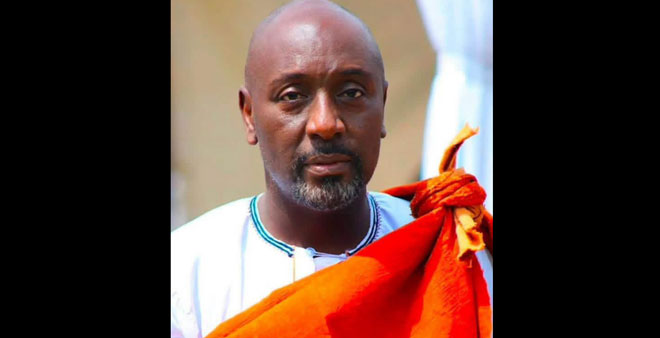

Fort Portal, Uganda | ENTEBBENEWS.NET | For more than three decades, King Oyo Nyimba Kabamba Iguru Rukidi IV was one of the most recognisable figures in Uganda’s traditional life.
He became king of Tooro in 1995, when he was just three years old. His coronation turned him into an international curiosity, and for years he was known as the world’s youngest reigning monarch.
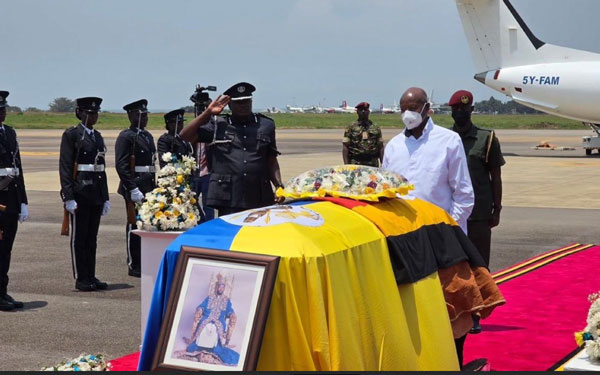
On Sep.12, his reign came to an end in the most traditional way possible. At the Karambi Royal Tombs near Fort Portal, western part of the country near the Democratic Republic of Congo, his coffin was lowered into the ground as mourners gathered to say goodbye to a king who had spent almost his entire life carrying the responsibilities of the Tooro throne.
Then came a ritual with a significance that went far beyond the funeral. Edward Rukidi Kijanangoma, 56, Oyo’s cousin and the man selected to succeed him, cast nine coffee berries into the grave.

With that act, Kijanangoma formally assumed the throne of Tooro. The ceremony brought to an end nearly two weeks of uncertainty over who should succeed Oyo and whether the late king could even be buried according to Tooro custom without a new monarch in place.
But the burial also marked the beginning of another difficult chapter. Kijanangoma inherits a kingdom that has been divided over his selection, a royal family still grieving and questions about how traditional expectations will fit with his existing family life.
A king remembered as a boy
Oyo died on Aug.27 in the United States, aged 34, while receiving treatment for cancer. His death brought an end to a reign that began before he was old enough to understand what a kingdom meant.
He inherited the throne following the death of his father, Omukama Patrick Matthew Kaboyo Olimi III.
The images of the young king in royal robes became familiar far beyond Uganda. But as Oyo grew older, the fascination surrounding the child monarch gradually gave way to a more mature public role.
He became a cultural ambassador for Tooro and was appointed a United Nations goodwill ambassador in the fight against HIV and Aids.
He also became involved in agriculture, tourism, education, sport and community development.
His sister, Princess Ruth Komuntale, told mourners at his funeral that behind the public responsibilities was a man who never entirely lost his childhood.
“Though he became king and carried responsibilities far beyond what most people ever experience, he never completely lost the young boy who loved to have fun,” she said.
She recalled playing with him and their cousins, running around the family home with their dogs and enjoying childhood games.
Oyo, she said, loved sport and farming. He was also a man of faith who spent time reading scripture and reflecting on what he was learning.
It was an intimate portrait of a monarch whose childhood had been lived in public. For many in Tooro, that is how they will remember him: not simply as the king who inherited the throne at three, but as the child who grew into the responsibilities of the crown.
The funeral and the succession crisis
But Oyo’s death quickly became about more than mourning. Within days, Tooro was confronted with a question that had no easy answer: who should become the next king?
The issue became particularly sensitive because the late king had not publicly been known to have a wife or children.
Shortly after his death, however, Tooro’s Prime Minister, Calvin Armstrong Rwomiire Akiiki, announced that Oyo had left behind a son.
Oyo’s mother, Queen Mother Best Kemigisa, and his sister Ruth Komuntale said the late king’s will provided for his biological son to succeed him.
The identity and status of the alleged son were not publicly established, however, and the claim became the centre of a bitter disagreement within the royal family.
Supporters of the clan’s decision argued that succession could not simply be based on an unverified biological claim and that Tooro’s customary succession procedures had to be followed.
The Babiito royal clan, headed by Omusuuga Charles Kamurasi ,therefore began its own process to determine a successor. That process eventually produced Kijanangoma. He was not initially the only contender.
George Desmond Kamurasi, another member of the royal family and captain at the southeast London club SE Dons, had emerged as a leading candidate in the early stages of the succession process. But his reported reluctance to take on the responsibilities of the throne created another opening.
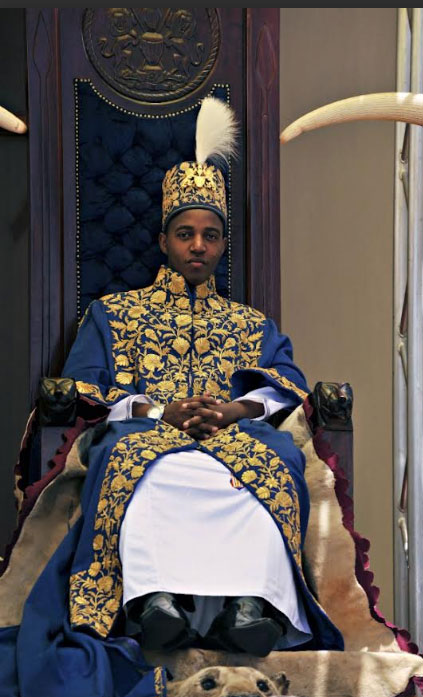
Kijanangoma then emerged as the man who could take over. He was a familiar face to many Ugandans, but not because he had spent his life seeking the throne.
He had worked as a journalist, news anchor and editor at Uganda Broadcasting Corporation. A former colleague, UBC business editor Denis Sigoa, described him as a quiet and unassuming man.
“He was very humble, down to earth,” Mr Sigoa told NTV Uganda. “He was a prince but he didn’t carry that aura of a prince.”
That description is significant because Kijanangoma’s path to the throne has been very different from Oyo’s.
Oyo became king as a child and spent nearly his entire life under the weight of the crown.
Kijanangoma enters the institution as an adult who has spent much of his career outside the palace.
He initially rejected the throne
There was another twist. After the Babiito clan announced his selection, Kijanangoma himself appeared to reject the position.
In a statement published on social media, he said he was declining to ascend the throne because he believed Oyo’s wishes should be respected.
“With profound humility, I respectfully decline to ascend the throne of Tooro,” he wrote. “Out of respect for our late king and the will he expressed for our kingdom, I believe his wishes must be honoured.”
He added: “The throne is sacred, the will of our fallen King must remain respected.”
The statement appeared to deepen an already serious crisis. The funeral was approaching. The royal family remained divided. And, importantly, traditional burial rituals required a successor to be in place.
According to Tooro officials, the new king has a specific role to play during the burial of his predecessor.
Without agreement over who that person was, the funeral itself risked becoming entangled in the succession dispute.
Government steps in
This is where the government became increasingly involved. Officially, the government was responsible for coordinating the state-supported funeral.
President Yoweri Museveni directed the Prime Minister, Robinah Nabbanja, to coordinate an inter-ministerial committee handling the arrangements. State House also took responsibility for major expenses, including medical bills and the repatriation of Oyo’s remains.
But behind the formal funeral arrangements, government officials were also involved in efforts to resolve the succession dispute.
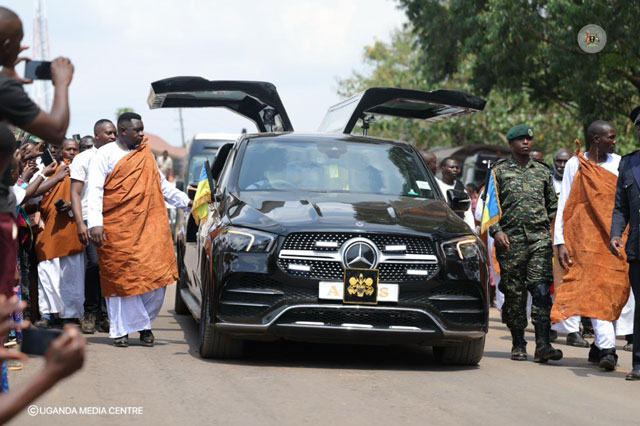
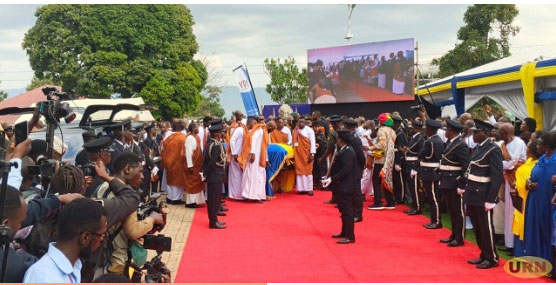
Reuters reported that last-minute meetings were held between members of the royal family and the royal clan, with government officials involved in trying to break the deadlock.
A source familiar with the talks said the government was exerting pressure on Queen Mother Kemigisa to accept the succession committee’s decision.
The government did not publicly say that it had hellped in the selection of Kijanangoma. Instead, the intervention was presented as an effort to ensure that the succession crisis did not prevent Oyo from receiving the traditional burial expected of a Tooro king. The timing was crucial.
By Sep.11, with the funeral scheduled for the following day, a solution had to be found.
On Sep.12, Kijanangoma was at Karambi. He cast the nine coffee berries into Oyo’s grave. The ritual was completed. The dead king was buried. And Tooro had a new king.
What happened behind closed doors?
The details of the final agreement remain unclear. The royal family has not publicly described a comprehensive settlement of the dispute. Nor has the government publicly claimed responsibility for helping break the gridlock.
This could have been deliberate owed to the fact that Tooro is a cultural institution rather than a political government. The government can support cultural institutions and help mediate disputes, but the question of who becomes Omukama is deeply rooted in Tooro’s own traditions.
That is why the government’s role was delicate. It needed to prevent a succession dispute from becoming a wider crisis without appearing to dictate the choice of king.
Tooro Prime Minister, Rwomiire ,had previously called for government assistance in creating conditions for a peaceful and fair process, while stressing that government could not choose the king.
In the end, the immediate objective was achieved. The funeral went ahead. The succession was settled sufficiently for the traditional rites to take place. But the questions raised during the dispute have not all disappeared.
The question of the new king’s wife
One of those questions concerns Kijanangoma’s marriage. The new king is married to Rebecca Amoding-Rukidi, a human resources professional from the Teso sub-region of eastern Uganda.
Her husband becoming king has now placed her in a very different public position. But some royal elders say the question is not simply whether she is married to the king. It is whether she can perform the traditional role expected of a king’s wife.
Prince Araali Kasagama, a member of the royal family, is quoted by a section of the media to have said that Kijanangoma’s marriage to Rebecca should not prevent him from becoming king.
But he argued that Tooro tradition requires a spouse who understands the kingdom’s culture and can preside over cultural responsibilities associated with the role of Omugo.
That has led to speculation that Kijanangoma could eventually marry a Mutooro woman.
Kasagama said such a marriage would not necessarily mean divorcing his current wife. He pointed to the historical practice of Tooro kings having more than one wife.
However, this is a cultural expectation raised by royal elders, not a confirmed legal requirement under the current legal framework.
It is also important to separate two issues that have sometimes been mixed together in public debate. One is the traditional role of the Omugo, or queen. The other is the question of producing a future heir.
There is also no established public evidence that Kijanangoma is legally required to marry a Mutooro woman in order to have a successor.
But within parts of the royal establishment, there is clearly a belief that the future queen should understand Tooro culture and play a role in maintaining the continuity of the institution.
For Amoding, the transition is therefore likely to mean that a previously private family matter will receive much greater public attention.
A throne with a complicated history
The debate also reflects the complicated history of Tooro’s monarchy. The government abolished its traditional kingdoms in 1967 under President Milton Obote.
They were restored in the 1990s under President Museveni, but without political or executive authority. The monarchs retained important cultural roles.
For Tooro, the institution has remained a symbol of identity, history and community. That helps explain why the succession dispute became so emotional.
For those who opposed Kijanangoma’s selection, the issue was not simply about choosing another ceremonial figure. It was about whether the wishes of a dead king should prevail over the decision of the royal clan.
For those supporting Kijanangoma, the issue was about protecting established customary procedures and ensuring that the kingdom had an adult monarch capable of immediately taking on the responsibilities of the institution.
The disagreement therefore brought two different ideas of legitimacy into conflict. One was based on Oyo’s reported will and the alleged existence of his son. The other was based on clan authority and customary succession. Neither side appeared willing to simply give way.
Oyo’s legacy
At his funeral, Archbishop of the Church of Uganda Samuel Kaziimba Mugalu tried to move the focus away from the dispute.
He urged Tooro to remember Oyo for the causes he championed.
“The land of Tooro is a beautiful place; we should promote tourism. This has been his campaign. Agriculture programmes, let us promote this,” he told mourners.
He also referred to Oyo’s passion for sport.
“Let us promote sports, because he loved sports so much,” the Archbishop said.
Then came a lighter moment.
“Above all, he supported Arsenal. So, if you want to follow his legacy, support Arsenal, all of you,” he said, prompting laughter from the mourners.
But the Archbishop also had a more serious warning for the royal family.
“Words spoken in grief can cause pain, division and conflict,” he said. “It can even destroy the legacy of the king we are mourning.”
That may prove to be one of the most important messages for the new reign.
Because the challenge facing Kijanangoma is not simply to occupy the throne.
It is to inherit a kingdom that has just experienced one of its most difficult moments in recent history.
From newsroom to royal palace
Kijanangoma’s background makes the transition unusual.He spent years working in journalism, reporting on events and interviewing other people.
Now he is the subject of the story.
He has gone from reading news bulletins to becoming one of the most closely watched traditional leaders in Uganda.
His colleagues have described him as reserved and approachable. That may help him as he begins a reign that will require considerable diplomacy.
He will have to work with the Queen Mother and members of Oyo’s immediate family, including Princess Ruth Komuntale.
He will have to reassure members of the Babiito clan who supported his selection. He will also need to engage with people who believe Oyo’s alleged son should have inherited the throne.
And he will have to navigate the expectations of royal elders, religious leaders, government officials and ordinary people across Tooro.
His first challenge, therefore, may not be ceremonial. It may be reconciliation.
The post Tooro gets a new king, but not an easy succession appeared first on 1:.