

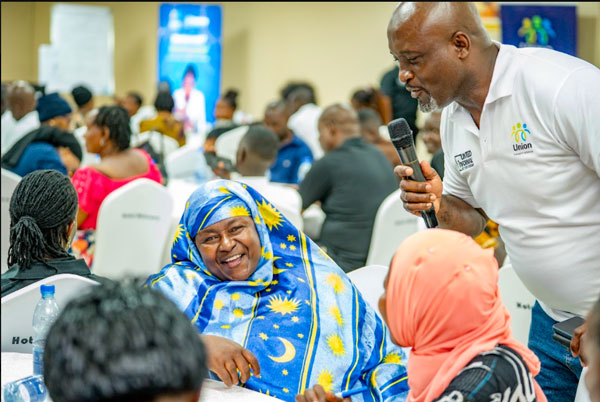
Union and the United Informal Sector Forum partner to build Uganda’s “invisible economy” as Fred Ssenoga named new product advisor

Kampala, Uganda | ENTEBBENEWS.NET | The Union Transport Alliance (UNION) and the United Informal Sector Forum (UISF) have formally launched a strategic partnership that will use its combined membership’s numbers to dominate the market, attract investment, create jobs and unlock affordable financing. Key to all this, officials said, is making Uganda’s informal economy visible.
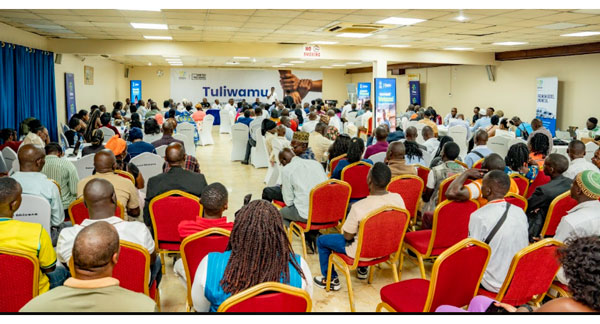
The partnership, launched at a high-key event Friday at Hotel Africana under the theme “Tuliwamu- Building Uganda’s Invisible Economy Together”, brought together representatives from all 18 informal-sector categories, UNION leadership, stakeholders and the media.
For UISF members, the Tuliwamu (we are together) partnership will mean greater access to digital markets and new channels through which they can sell and distribute products, whereas for the Union, the partnership opens its ecosystem to a much broader network of entrepreneurs and customers beyond transport operators.

“With the partnership of the Union Transport Alliance and the Informal Sector Forum, growth of members is guaranteed,” Fred Ssenoga, Chief Executive Officer of the Union said at Friday’s launch. “We can undertake various ventures to manufacture products for the market by harnessing the value of numbers, discipline, and systems within our Union.”
At its core, the Union Alliance is designed as a commercial platform (“supermarket”) for already existing products such as the Union ride-hailing app, bike loans, Union water, pads, smartphones and Union Oil, the newly launched Union Data Bundle, as well as future products such as Union matatus (taxis), Union buses, Union trucks, tyres, spare parts, electric cars, backpacks, laptops, scholastic materials and many more.
It has struck partnerships with key players in the banking, transport, telecom and digital sectors and recently introduced the Union Online Duuka via Ruka Pay that is designed to make everyday shopping simpler and more accessible by connecting customers with a growing range of products from Union and trusted Union stockists.


Uganda’s informal economy is described as “invisible” not because it lacks economic value, but because much of its contribution remains outside formal systems and conventional economic structures. Yet millions of entrepreneurs, traders, producers and service providers generate income, create employment, provide essential goods and services, and sustain families and communities every day.
The partnership, officials said, seeks to change this by connecting UISF’s diverse membership to UNION’s expanding product ecosystem designed not only to meet everyday needs but also to create opportunities for members and their families to participate in distribution, retail and other income-generating activities. Through this partnership, traders, retailers, salons, restaurants, casual workers and other informal businesses can access new products, markets and commercial opportunities.
The recently launched Union Online Duuka further strengthens the partnership by creating a digital marketplace connecting consumers, businesses and products, with significant potential for informal-sector traders.
“For a long time, one of our biggest challenges was the lack of unity within the informal sector. However, this partnership marks a new beginning. By joining hands with the Union Transport Alliance, we are creating opportunities to strengthen our businesses, improve livelihoods,… pic.twitter.com/psNyW19g8A
— Union Transport Alliance (@UnionTransportA) September 4, 2026
Recognizing the widespread prevalence of the informal sector in Uganda, the Third National Development Plan (NDPIII) identified addressing this challenge as a crucial pathway to advancing private sector development, promoting inclusive growth, and accelerating the country’s socio-economic transformation.
However, a significant share of economic activity continues to operate outside the formal regulatory framework, constraining productivity, limiting domestic revenue mobilization, and reducing access to financial, business development, and social protection services.
Addressing this challenge therefore remains a critical priority for strengthening the formal private sector, broadening the tax base, and advancing sustainable and inclusive economic development in Uganda.

Informal sector gets new product advisor
A significant milestone in the partnership is the appointment of Ssenoga, Chief Executive Officer of UNION, as Product Advisor to the United Informal Sector Forum. The appointment is intended to strengthen UISF’s ability to identify, develop and connect its members to products and services that respond to their actual economic realities.
The ambition behind the UNION-UISF partnership is to make this economic activity more organized, more connected, more productive and more visible to opportunity.
“Building Uganda’s Invisible Economy Together” is therefore a call to recognize the economic power that already exists in Uganda’s informal sector and to build the systems, partnerships and opportunities that allow that power to translate into stronger businesses, higher household incomes and more resilient communities.
Asuman Mwanje, head of UISF, also chairman of the Uganda Tailors Association, and spokesperson for KACITA, said unity will directly address key challenges facing informal traders, including formalising member enterprises through government agencies and improving internal business dispute resolution.
The event was capped by the presence of artist Grace Nakimera, who got a sh10million boost for her live concert due at Kampala Serena Hotel on September 11. The Union also announced an education initiative offering 100 full bursaries and 1,200 half bursaries for primary and secondary schools.

Uganda’s transport sector transformed
Officials from the bus, boda boda, taxi and trucker national unions attended the launch and made cases for much needed transformation in the transport sector.
Uganda’s transport sector—long fragmented, informal, and underserved—has lacked the structure, financing, and coordination needed to unlock its full economic potential. Uganda’s Union Transport Alliance (The Union) comprises leaders of the taxi, bus, boda boda and truck sectors across the country.
Progress has already been accelerated by strong, high-impact partnerships with leading institutions, including NSSF, MTN, Housing Finance Bank, Spiro, Next Media and others, enabling the Union to deliver financing, connectivity, mobility solutions, and nationwide visibility to its members.
“Building on this foundation, the alliance represents a horizontal expansion across the entire transport ecosystem—integrating boda bodas, taxis, buses, and truck operators onto one unified platform. This coordinated structure enables shared access to financing, technology, partnerships, and markets,” an economics expert said recently.
The Alliance, the first of its kind in the region, also opens the door for deeper collaboration with partners across the mobility, financial, manufacturers and other service providers, offering access to one of the largest organized transport networks in the region.
****
RELATED STORY
Union Online Duuka hits Ugandan market
The post Uganda’s informal sector set to ride on success of the transport union appeared first on 1:.