


QCIL has launched a locally manufactured version of Hydroxyurea for the treatment of sickle cell disease
Kampala, Uganda | JULIUS BUSINGE | Uganda has taken a significant step in the fight against sickle cell disease following the launch of locally manufactured Hydroxyurea by Quality Chemical Industries Limited, a development health officials say could improve treatment access, reduce costs, and strengthen the country’s pharmaceutical independence.

The announcement was made at the company’s manufacturing facility in Luzira, Kampala, on 20 May, in an event attended by senior government officials, including representatives from the Ministry of Health, as well as company leadership led by executive chairman Emmanuel Katongole.
For Uganda, where sickle cell disease remains one of the most common inherited blood disorders, the development is being viewed not just as a pharmaceutical milestone, but as a broader shift in how the country responds to long-term public health challenges.
A persistent health burden
Sickle cell disease continues to affect thousands of families across Uganda every year, placing sustained pressure on health services and household incomes.

According to Uganda’s Ministry of Health, an estimated 20,000 babies are born with the condition annually. Around 30 percent of the population carries the sickle cell gene, making it one of the highest burden countries globally.
Worldwide, the World Health Organization estimates that more than 300,000 children are born with sickle cell disease each year, with the majority of cases concentrated in sub-Saharan Africa.
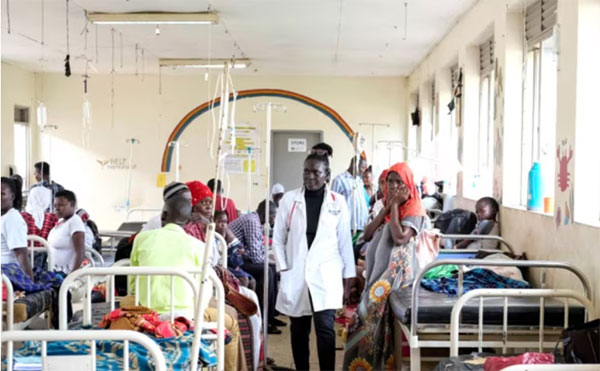
In Uganda, the condition contributes significantly to childhood illness and mortality. Recurrent pain crises, frequent hospital admissions, anaemia-related complications, and long-term organ damage often define the lived experience of patients. For families, the disease can mean repeated medical costs, time away from work, and prolonged emotional strain.
Health experts say the burden is particularly heavy in northern, eastern, and parts of central Uganda, where access to specialised care and consistent treatment has historically been limited.
Hydroxyurea is widely recognised in global clinical practice as one of the most effective treatments for managing sickle cell disease. It is not a cure, but it plays a critical role in reducing the frequency and severity of complications.
Clinical evidence shows that the drug helps reduce painful crises, decreases the need for hospital admissions, lowers blood transfusion requirements, and improves overall quality of life for patients.
Until now, access to Hydroxyurea in Uganda has largely depended on imports, a factor that has contributed to inconsistent availability and high costs for some patients.
The local production of the medicine is therefore expected to address one of the most persistent challenges in sickle cell care: reliable and affordable access to treatment.
A shift toward local pharmaceutical manufacturing
The launch of locally produced Hydroxyurea places Uganda within a growing group of African countries seeking to strengthen domestic pharmaceutical manufacturing capacity as a way of responding to public health needs.
For QCIL, which has spent more than two decades producing medicines for diseases such as HIV and malaria, the move represents an expansion into non-communicable and inherited conditions that are increasingly shaping Africa’s disease burden.
Speaking at the launch, QCIL Chief Executive Officer Ajay Kumar described the development as part of a broader shift toward African-led health solutions.
“Africa is fighting a new chapter of home-grown healing,” he said, adding that the company’s work reflects a belief in greater health sovereignty for African nations.
He said the introduction of Hydroxyurea demonstrates what is possible when investment is directed toward local production capacity.
“We are manufacturing solutions for African problems. It is a spirit of self-reliance,” he said.
The company’s leadership said the decision to produce Hydroxyurea locally reflects both medical need and long-term strategic thinking about supply chains, affordability, and resilience in health systems.
Government response and policy direction
The Ministry of Health has described the development as an important milestone for Uganda’s healthcare system.
Speaking as chief guest at the launch, Permanent Secretary Dr Diana Atwine said the introduction of locally manufactured Hydroxyurea represents a significant step forward in improving care for sickle cell patients.
“This is a consequential milestone. Uganda has crossed another threshold with the launch of Hydroxyurea,” she said.
She added that the development offers renewed hope for families affected by the disease, particularly those who have struggled with access to consistent medication.
According to the Ministry of Health, sickle cell disease is responsible for approximately 5 percent of deaths in Uganda, underscoring its significance as a public health challenge.
Dr Atwine acknowledged that access to essential medicines for chronic conditions remains uneven, partly due to reliance on imports.
“Access to some of these essentials is hard, but I’m happy we’re able to produce some of these medicines together,” she said.
The ministry confirmed that Hydroxyurea will now be integrated into Uganda’s essential medicines list, a step that is expected to improve procurement and distribution within the public health system.
“We’re going to put it on the list of essential medicines,” she said.
Beyond policy inclusion, government officials outlined plans to strengthen procurement systems to ensure the medicine reaches health facilities more efficiently.
Dr Atwine said efforts would be made to improve distribution networks so that patients in different parts of the country can access the drug without long delays.
“We are going to continue working on rapid procurement and distribution of Hydroxyurea in Uganda,” she said.
The Ministry also indicated that the expansion of access to treatment would be supported by broader reforms aimed at decentralising specialised healthcare services.
“In our new structure we’re going to have medical doctors and professionals at Health Centre III across the country and so children with sickle cell will get the service,” she said.
This approach is expected to bring care closer to communities, particularly in rural areas where specialist services have traditionally been limited.
Screening, awareness and prevention
Uganda has in recent years expanded screening programmes for sickle cell disease, particularly within public health facilities. Early diagnosis has improved, allowing for better disease management from a young age.
However, health officials say challenges remain in public awareness, genetic counselling, and community-level understanding of the condition.
Dr Atwine said government plans to scale up sensitisation efforts, including encouraging premarital screening to help reduce the risk of new cases.
“The population needs to be helped to do premarital testing for sickle cell,” she said.
Health workers are also expected to receive additional training as part of the rollout of expanded treatment access.
“We’ll train more health workers and communities about sickle cell,” she added.
For patients and families, the implications of improved access to Hydroxyurea extend beyond medical outcomes.
Sickle cell disease is often associated with repeated hospital visits, long-term pain management, and reduced productivity, all of which can place a heavy financial burden on households.
Health experts say that improved access to treatment could help reduce these pressures by lowering the frequency of complications and stabilising patients’ health over time.
For many families, the cost of imported medicines has also been a barrier to consistent treatment. Local production is expected to help ease this challenge, although affordability and distribution will remain key factors in determining impact.
The introduction of locally manufactured Hydroxyurea also aligns with Uganda’s broader strategy to strengthen domestic pharmaceutical production and reduce dependence on imported medicines.
Government officials have increasingly argued that local manufacturing is central to improving health security, particularly in the face of global supply chain disruptions experienced in recent years.
“We’re going down on the dependency curve on most products in our country,” Dr Atwine said.
For policymakers, the development represents part of a longer-term effort to build a more resilient health system capable of responding to both infectious and non-communicable diseases.
Looking ahead
As Uganda continues to address the growing burden of chronic and inherited diseases, the partnership between government and local manufacturers is expected to play an increasingly important role.
For QCIL, the launch of Hydroxyurea represents both a commercial expansion and a statement about the direction of African healthcare manufacturing.
“Africa is rising and Africa is healing,” Ajay Kumar said at the close of the launch event.
Whether the impact of locally produced Hydroxyurea translates into sustained improvements in patient outcomes will depend on how effectively it is distributed, prescribed, and accessed across Uganda’s health system.
But for now, health officials and patients alike see the development as a meaningful step toward closing long-standing gaps in sickle cell care.