

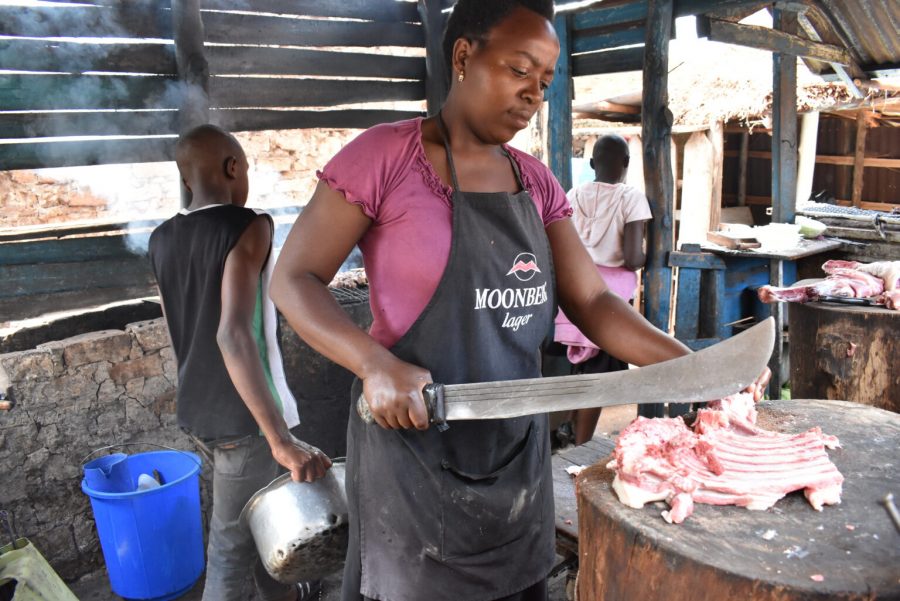
Veterinary authorities in Sheema District, Western Uganda have put a temporary ban on selling pork products and pig movements over a reported outbreak of African swine fever (ASF) in the area.
In a letter dated 27th June, 2022, addressed to the Chief administrative officer Sheema district local government and signed Dr .Joseph Amanya, District Veterinary Officers (DVO) ,authorities temporarily slumped a ban on the slaughter and movement of pigs in and out of Sheema over claiming that there is a danger of people consuming dead carcasses unknowingly and the disease may spread to other parts of the district and beyond.
‘’Samples have been picked for submission to NADDEC Lab Entebbe and as we await results the following measures are hereby instituted; All movements of pigs in and out of the whole district STOP immediately until further notice. Slaughter of pigs and pork joints in Sheema municipality and Sheema south constituency stop immediately’’,reads the letter.
Dr.Amanya further ordered that all sick pigs should be isolated immediately and proper burial of the dead .He added that strict biosecurity measures at all pig farms in the district should be considered, emphasizing that pigs should not be fed leftovers from markets or pig products like bones.

‘’With issuance of this letter all relevant authorities are encouraged to act accordingly for the good of the farmers, our herds, district and country at large’’, notes Dr.Amanya.

It should be remembered that a recent report published by the World Animal Protection indicated that Uganda tops in pork consumption standing at 65.4%, followed by Zambia (60.5%), Tanzania (59.6%) and Kenya trailing.
Responsible for massive losses in pig populations and drastic economic consequences, African swine fever (ASF) has become a major crisis for the pork industry in recent years.
Currently affecting several regions around the world, and with no effective vaccine, the disease is not only impeding animal health and welfare but has also detrimental impacts on biodiversity and the livelihoods of farmers, according to the World Organization for Animal Health (WOAH).
The virus is highly resistant in the environment, meaning that it can survive on clothes, boots, wheels, and other materials. It can also survive in various pork products, such as ham, sausages or bacon.